
Professor of Geology Minik Rosing – Greenland
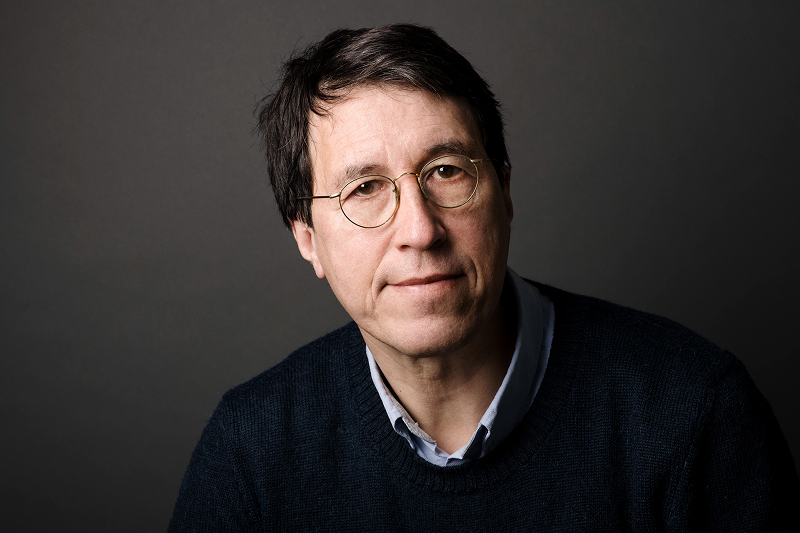
Professor of Geology Minik Rosing is on the shortlist for the Nordic Council Environment Prize 2025
The professor was nominated for his visionary, research-based work on glacial rock flour – a nature-based climate technology with the potential to reduce global CO₂ emissions and improve food security in some of the world's most vulnerable regions.
Mink Rosing has documented how glacial rock flour, a fine, mineral-rich material that forms naturally under the Greenland Ice Sheet, can be deployed using a technique called “enhanced rock weathering”. When spread over agricultural soil, the flour reacts chemically with the carbon from atmospheric CO2, triggering a natural carbon-capture process that prevents it from returning to the atmosphere as a greenhouse gas. Tests show that a ton of glacial rock flour captures up to 14.5 kg of CO₂. Spread over just one hectare, the flour can reduce atmospheric CO₂ by up to 728 kg.
In addition to its climate effect, glacial rock flour also has a positive impact on crop yields, particularly in tropical and subtropical regions where the soil is often eroded and nutrient-poor. Trials in Ghana have shown that maize yields can be up to 35% higher, making this technology particularly relevant in regions facing high levels of food insecurity.
The project is both a scientific breakthrough and a practical solution capable of inspiring civil society, farmers and policymakers around the world. It also has a unique potential for scaling. Glacial rock flour forms naturally in Greenland in quantities far greater than it would be possible to extract. It requires no artificial processes – just transport, local support and knowledge sharing. In effect, Minik Rosing’s work combines the sustainable use of nature with global impact.
The professor’s project is a tangible example of how Nordic research and resources can create solutions that engage civil society, address the climate crisis, and contribute to achieving the UN Sustainable Development Goals. He demonstrates that Greenland, often regarded as a symbol of the consequences of the climate crisis, can also play a key role in finding solutions.
Minik Rosing’s strong Nordic starting point, proven impact on the climate, and his international perspective make him an obvious candidate for the Nordic Council Environment Prize 2025.