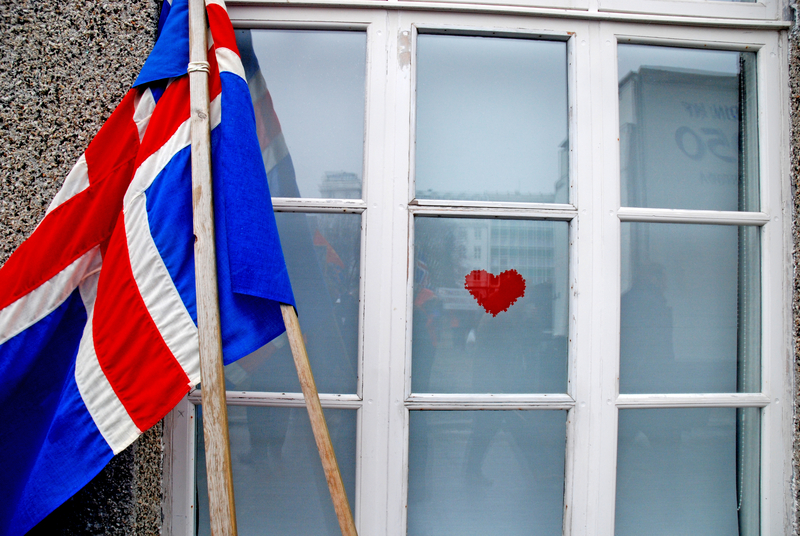
The Icelandic flag

The flag of Iceland was first adopted as a regional flag by royal decree on July 19, 1915. When Iceland became independent on December 1, 1918, the flag became a national symbol. On July 17, 1944, Iceland declared itself a republic. The flag was designed by Matthías Þórðarson. The author of the flag states that the colours represent the three elements that created the island: mountain blue (fjallablámi), Ice and fire. The combination of the traditional Icelandic colours blue and white with red reflects historical links with Norway. The use of the cross symbolises Iceland’s close ties with the rest of the Nordic countries.
The official red colour is Pantone 1795, which corresponds fairly accurately to the digital colours:
R:215 G:31 B:41
C:10 M:99 Y:96 K:1
The official blue colour is Pantone 287, which corresponds fairly accurately to the digital colours:
R:0 G:82 B:165
C:100 M:70 Y:15 K:2
The proportional measurements for the length are: 5,3,10
The proportional measurements for the height are: 4,3,4