EXPO 2025: Japan, Europe and the Nordics as partners in a circular future
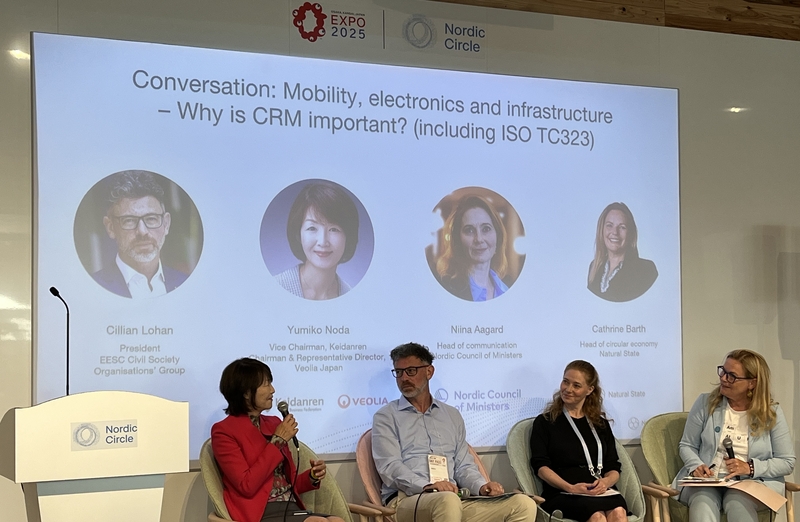
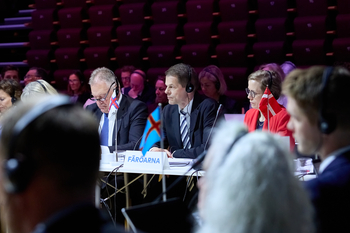
“The circular economy is not a choice. It’s a necessity for the green transition and systemic change. Industries and regions need to work together to ensure that resources last for future generations,” Niina Aagaard, Head of Communications at the Nordic Council of Ministers, told the EU Critical Raw Materials Day in the Nordic Pavilion at EXPO 2025, Osaka, Japan. In addition, Aagaard focused on the prime ministers’ ambition to make the Nordic Region the most sustainable and integrated region in the world by 2030. She also stressed the importance of extracting far more critical raw materials from recycling to ensure that access to resources is sustainable and fair.
The circular economy as a driver of systemic change
The discussions among the many stakeholders attending EXPO emphasised the need for new business models to create lasting change. Products need to be designed to last longer, service models need to replace linear consumption patterns, and we must use public procurement to speed up the transition. Participants at the event identified the Nordic Region as a key player in this shift. They based their argument on the fact that the Nordic countries have technological know-how, political will and structures for working together that will facilitate bridge building between Japan, the Nordic Region and Europe.
Happy to share insights
Nordic Innovation, which is funded by the Nordic Council of Ministers, works with the business sector to promote the circular economy. In three recent reports, Nordic Innovation highlights the potential for the reuse and recycling of critical raw materials. The reports point out that the most strategic step we can take is to support and develop secondary value chains. They also include tangible recommendations for making this happen. Nordic Innovation is also working on the establishment of the Nordic Critical Raw Material Centre, a hub for recycling and innovation. The target is to source at least 50% of critical raw materials from secondary sources.
International gathering
The event brought together international players from the automotive and electronics industries as well as experts in the circular economy and sustainable mining. The programme included presentations and panel discussions on topics such as urban mining, recycling, product passports, circular business models and the sustainable extraction of raw materials. Other speakers included representatives from Toyota, Panasonic, Holland Circular Hotspot, Generation Climate Europe and Keidanren. Janez Potočnik, Co-Chair of the International Resource Panel (IRP), rounded off the day with a digital presentation on the systemic changes needed to ensure sustainable access to critical resources. Nordic Circular Hotspot coordinated the event as part of the EU Circular Days.