Culture is resilience – Nordics step up preparedness through co-operation
These messages were highlighted during a panel debate co-hosted by the Nordic Council of Ministers at MONDIACULT 2025, the world’s largest cultural policy conference, held in Barcelona from 29 September to 1 October.
“Culture is resilience. In times of crisis, it must be at the core of our response. That’s why Nordic and international co-operation is essential to protect freedom, identity, and the voices at risk when it matters the most,” said Norway’s Minister of Culture and Equality, Lubna Jaffery, in her opening statement.
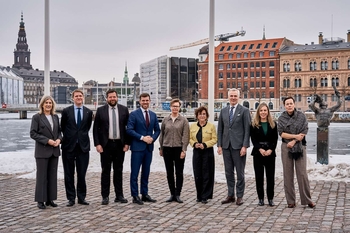
Finland’s Minister of Science and Culture Mari-Leena Talvitie, State Secretary to the Sweden’s Minister for Culture Karin Svanborg-Sjövall, and Minister of Social Affairs and Culture of the Faroe Islands, Eirikur í Jákupsstovu, also took part in the event.
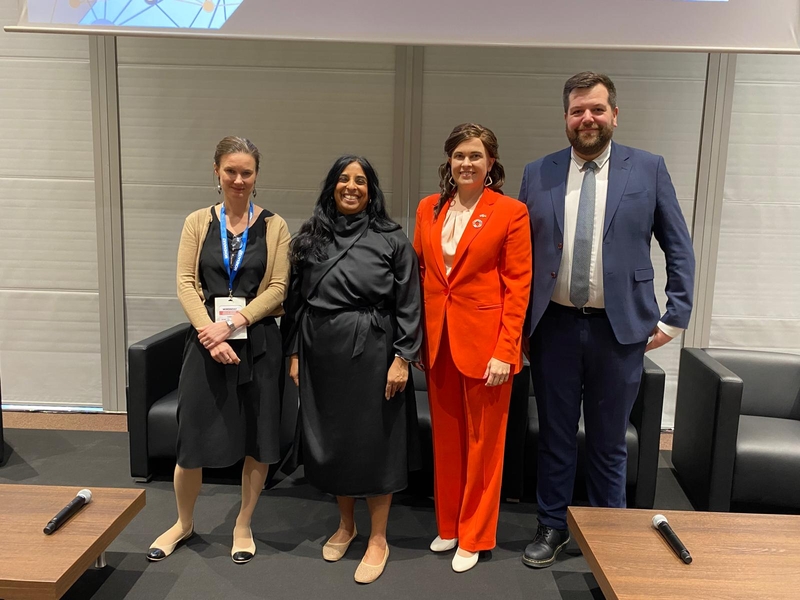
Karin Svanborg-Sjövall, statssekreterare vid Sveriges kulturdepartement, Lubna Jaffery Norges kultur- och jämställdhetsminister, Mari-Leena Talvitie, Finlands kulturminister , Eirikur í Jákupsstovu, social- och kulturminister på Färöarna.
Nordic and international co-operation is key
The Nordic Council of Ministers is working to strengthen the role of culture in crisis preparedness by stepping up the exchange of experience within the cultural sector, both in the Nordic Region and internationally. The aim is to ensure that culture remains a cornerstone of resilience, democracy, and social cohesion. Discussions on stronger co-operation in the field of culture and preparedness were also a key theme when the ministers for culture met earlier this spring and decided to prepare a joint Nordic initiative to reinforce cross-sector dialogue on the role of culture in societal security.
“Culture is a resource in times of peace – and a lifeline in times of crisis. To protect culture in crisis is to protect humanity itself and society’s resilience,” said Eirikur í Jákupsstovu, Minister of Social Affairs and Culture of the Faroe Islands.
At the MONDIACULT event, it was emphasised that the Nordic countries share a strong community of values rooted in democracy, freedom of expression, and mutual trust. These are vital components in ensuring resilient societies that safeguard human and cultural rights. In a global context, the Nordic countries can lead the way in protecting cultural rights.
“Finland’s and Åland’s Presidency of Nordic Council of Ministers has emphasised how a strong cultural life, media literacy, and cultural diversity contribute to a resilient society by fostering cohesion, critical thinking, and democratic participation. It is important that these topics are discussed in a global forum such as UNESCO’s MONDIACULT conference,” said Mari-Leena Talvitie, Finland’s Minister of Science and Culture.
Two panel discussions at MONDIACULT explored both how culture contributes to social development and reconstruction, and how freedom of expression and artistic freedom strengthen the regions’ capacity to cope with threats and crises. Panel participants included Abdullah Alkafri (Ettijahat-Independent Culture), Kristin Danielsen (Nordic Culture Fund), Deeyah Khan (UNESCO Goodwill Ambassador) and Denis Krivosheev (Amnesty International). The moderator was UNESCO Youth Delegate Iina-Lotta Kuisma.