New Minister Declaration: Psychological Resilience is a Central Part of Nordic Cooperation for Societal Security

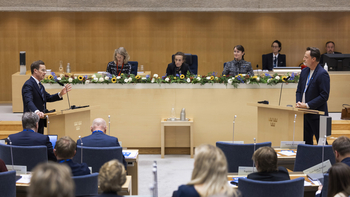
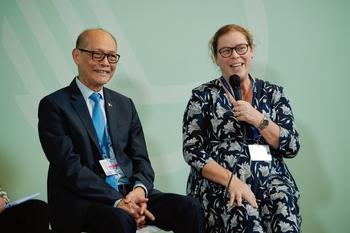
On October 23, the Nordic regional ministers held their annual meeting in Helsinki, under the Finnish-Ålandic presidency. The entire meeting focused on resilience and robustness in various aspects of regional development and concluded with the ministers adopting a joint Nordic declaration in the field.
The changes in the geopolitical environment are visible in many ways, both in Finland and elsewhere in the Nordic region. We must prepare for various future scenarios, and this applies to regional development and planning as well as to other sectors of society. In this declaration, we identify key areas where we can further intensify the exchange of experiences and cooperation between the Nordic countries.
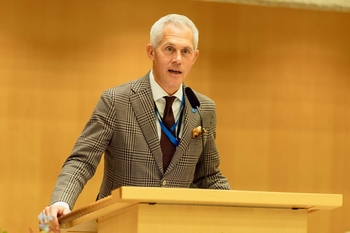
The declaration highlights three areas for deepened Nordic cooperation: regional development, physical planning, and freedom of movement. It emphasizes that psychological resilience is a crucial part of a society’s crisis preparedness. Docent Pasi Mäenpää from Helsinki University attended the meeting and presented recent studies in the field. He stated that it’s important to create an understanding of which role authorities have and which role people in the civil society have in times of crises. Social and local circumstances, trust and networks are important for building long-term resilience.
Mental resilience is not a matter of a well-prepared state and obedient citizens, it is about active and self-organizing people coping together in their local communities.
In the declaration, the Nordic countries also agreed to strengthen their capacity in physical planning to meet future crises and to cooperate more closely on how these aspects can be integrated into governance and legislation.
Additionally, they endorsed the efforts for development of freedom of movement in times of crisis, following a presentation by the Freedom of Movement Council on lessons learned from the pandemic.
The declaration will help guide the Nordic countries’ future work and cross-border collaboration within regional development, physical planning and freedom of movement.
Robustness and resilience are largely about how our societies function in everyday life. It is at the local level where people live their lives, where businesses operate, and where civil society is engaged – and it is also there that the capacity to handle crises is truly tested. It is therefore an important declaration the Nordic ministers have adopted.
Declaration by the Nordic Ministerial Council for Regional Policy (MR-R), 23 October 2025, Finland
Robustness, resilience, and civil preparedness in Nordic co-operation within regional development and planning
In May 2025, the Nordic prime ministers adopted a joint declaration to strengthen resilience and ensure effective civil preparedness. The Nordic ministers for regional policy (MR-R) reaffirm the importance of prioritising key areas within regional development and planning, in order to further deepen Nordic co-operation on robustness, resilience, and civil preparedness.
In recent years, Nordic societies have undergone major economic, environmental, and social changes. We have not only experienced a pandemic, but Russia’s full-scale invasion of Ukraine has drastically altered the security situation in our immediate neighbourhood. In addition, we are also being challenged by climate change and everything that poses for society in terms of natural disasters and other serious consequences.
Robustness, resilience, and civil preparedness have become increasingly important building blocks for regional development and planning. It is crucial that authorities at all levels – national, regional, and local – ensure societal continuity, plan for preparedness, and are able to anticipate, manage, and recover from crises. The capacities of the business sector and civil society are also central resources in strengthening civil preparedness in connection with regional development and planning.
The ministers for regional policy underline the importance of identifying and deepening co-operation in these areas, with the aim of supporting the shared vision for the Nordic Region to be the most integrated and sustainable region in the world. The ministers have also emphasised the pivotal role that these efforts play in the implementation of the Nordic Co-operation Programme for Regional Development and Planning 2025–2030.
The ministers for regional policy stand united in their aspiration to deepen Nordic co-operation within regional development and planning, with a particular emphasis on robustness, resilience, and civil preparedness. The ministers stress the importance of integrating these perspectives in joint initiatives and underline that improved co-ordination between the countries is essential to safeguarding societal resilience and promoting sustainable development across the Nordic Region.
Key areas for further co-operation
The ministers for regional policy reaffirm their shared commitment to strengthening co-operation, knowledge development, and the development of co-operative models and best practices in these key areas. By co-ordinating efforts and sharing experiences, the Nordic countries can face future challenges together with increased resilience.
- Robustness, resilience, and civil preparedness within regional development
The ministers for regional policy see added value in the Nordic countries working collectively within the framework of regional development, on issues related to robustness, resilience, and civil preparedness.
As a result of the Swedish presidency project in 2024, recommendations have been developed on how this work can be further promoted. At national, regional, and local levels, the promotion of robustness, resilience, and civil preparedness can help to strengthen the Nordic Region’s competitiveness and sustainability.
The ministers for regional policy stress that the importance of psychological resilience must be recognised as a key element in efforts to bolster robustness, resilience, and civil preparedness.
- Robustness, resilience, and civil preparedness within spatial planning
Physical planning is a fundamental prerequisite for long-term and sustainable land use. In this work, it is crucial to take into account peacetime crises as well as situations that pose a threat of war and outright war itself.
The ministers for regional policy note that the Nordic countries, in many respects, share similar conditions and challenges, and that land use and physical planning play a central role in strengthening societal robustness. Planning also includes cross-border and thematic issues that are of fundamental importance for the region’s future.
The ministers for regional policy stress the importance of addressing these challenges and further deepening co-operation around how physical planning can aid robustness, resilience, and civil preparedness, and around how these perspectives can be integrated into legislation, governance, and implementation.
The ministers also welcome synergies with other ongoing Nordic-Baltic and macro-regional co-operation initiatives on robustness, resilience, and civil preparedness related to physical planning.
- Leveraging the experiences of border regions and border committees to safeguard freedom of movement in times of crisis
Cross-border co-operation and freedom of movement are cornerstones of Nordic co-operation. The ministers emphasise the importance of learning from previous vulnerabilities and of systematic preparation for potential future crisis situations.
As specialists in cross-border co-operation, the border regions and border committees possess valuable practical experience that should be leveraged.
The ministers for regional policy stress the importance of drawing on these experiences and strengthening Nordic co-ordination to ensure freedom of movement even in times of crisis. Cross-border co-operation is regarded as a cornerstone of Nordic co-operation.
The ministers for regional policy confirm their responsibility to further strengthen the Nordic Region’s resilience and crisis preparedness and declare that, through co-operation, united and strong, we will build the most sustainable and integrated region that can tackle the challenges of the next decade.
We, the Nordic Ministers for Regional Policy, will:
- act upon the recommendations developed through the Finnish presidency project on psychological resilience as part of civil preparedness at the regional and local levels,
- stress the importance of jointly strengthening capacity within physical planning to address future crises, and support deeper co-operation on how these aspects are reflected in governance and legislation; and
- support the safeguarding of freedom of movement in times of crisis and initiatives that promote this.
These priorities align with the implementation of the Nordic Co-operation Programme for Regional Development and Planning 2025–2030 and will be followed up on by the Committee of Senior Officials for Regional Policy (EK-R).