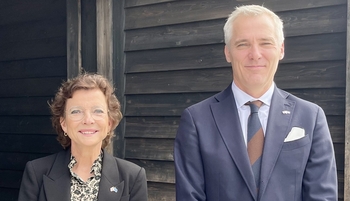
Nordic energy ministers call for closer co-operation on security and competitiveness
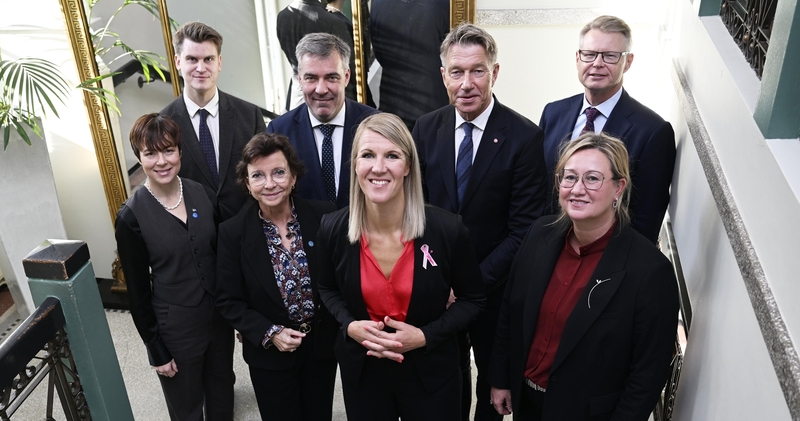
Security of supply was high on the agenda and is covered in the declaration.
“The declaration marks a shared Nordic goal: to maintain and strengthen our region’s resilience, sustainability and competitiveness – and in doing so help make Europe cleaner and more independent, free from dependency on Russian gas,” the Finnish minister, Sari Multala, and her Åland colleague, Camilla Gunell, said on behalf of their countries’ joint Presidency of the Nordic Council of Ministers.
A combination of the increasingly serious security situation in Europe and the Nordic Region, along with changes to the nature of the transatlantic alliance, has made Nordic co-operation an even more central factor in the region’s resilience. Although the countries have different starting points and priorities, the ministers stressed that many of the challenges and opportunities are the same and that the best way to address them is together.
Dialogue with the Ukrainian Deputy Minister of Energy, Roman Andarak
One of the key points on the agenda for the meeting was a dialogue with the Ukrainian Deputy Minister of Energy, Mr. Roman Andarak, who joined his Nordic counterparts online to share experiences of maintaining supplies of energy under extreme conditions. The Nordic ministers thanked their Ukrainian colleague for his input and reaffirmed their desire to continue working with Ukraine – both now and in the future reconstruction of the nation’s energy system.
Underpinning national efforts
The ministers also discussed ways in which Nordic co-operation can underpin work done at national level. Due to the increasing proportion of its energy needs it produces itself and its strong technological competencies, the Nordic Region is in a good position to be a global leader in energy security and the green transition – including in Arctic areas where the potential for renewable energy is high. Competitiveness was also on the ministers’ agenda. Nordic industry has benefited from an electricity market that works well and from access to emission-free electricity at reasonable prices. Electrification, data centres and hydrogen production will all require significant investment in the grid and capacity, and the ministers stressed the need for this expansion to happen soon.
Energy co-operation in pursuit of Vision 2030
The Secretary General of the Nordic Council of Ministers, Karen Ellemann, told the meeting that Nordic energy co-operation is an important part of the Council of Ministers’ efforts to realise Vision 2030.
“Energy co-operation boosts the resilience, sustainability and competitiveness of the Nordic countries and contributes to the ambition of making the Nordic Region the most sustainable and integrated region in the world by 2030,” the Secretary General said.
“It’s no longer ‘just’ about combating global warming. We also need to safeguard security of supply and our independence, which also means protecting our freedom and democratic values.”
The Nordic countries have a unique sense of community and work together on defined goals. The Nordic energy system continues to be strong, resilient and clean, but the geopolitical situation is a challenge. At our meeting in Helsinki on 1 October 2025, we, the Nordic energy ministers, discussed the current energy situation and the challenges ahead.
In a time of war in Europe, a tense security situation, including in the Nordic Region, and changes to the nature of the transatlantic alliance, security of energy supply is crucial. Nordic co-operation has proven its strength and importance in the face of these crises. Our countries have different starting points and priorities, but they also have a wide range of challenges and opportunities in common, and we support their joint ambitions.
The Ukrainian Deputy Minister of Energy, Mr. Roman Andarak, joined the meeting online and shared experiences of maintaining supplies under extremely challenging conditions. The Nordic ministers thank Roman Andarak for sharing his experiences despite the challenging situation in his home country. The ministers reaffirm the good relationship between Ukraine and the Nordic countries and emphasise the importance of maintaining co-operation and dialogue both now and when rebuilding the Ukrainian energy system].
Based on the meeting with the Ukrainian Deputy Minister and a high-level seminar on security of supply organised by the Finnish Presidency before their meeting, the energy ministers discussed ways in which Nordic co-operation can support national work on security of supply.
The Nordic Region is in a good position to act as a global leader in energy security through its tradition of co-operation, technological advances and shared values, as well as the increasing proportion of energy it produces itself, which improves security of supply and resilience, and reduces dependence on imported fossil fuels from outside the EU/EEA. This also applies to those parts of the Arctic that are more isolated in terms of energy, but which are well-positioned to contribute to the production of green fuels due to their great potential in renewable energy. By working more closely together, the Nordic countries can build a more secure and sustainable energy future for the benefit of all.
Ongoing attention must also be paid to the competitiveness of the Nordic Region. Nordic industry has benefited from an electricity market that works well and from access to emission-free electricity at reasonable prices. We are about to see further electrification, the opening of large data centres, hydrogen production and more, and all of the forecasts point to higher demand for electricity. This will require significant investments in the grid and in power plants – including plannable energy, storage and consumer flexibility to ensure the electricity system works. Speed and regional coordination must be improved, and the potential is there to improve the framework conditions through simplification, coordination and harmonisation.
The goal is to continue working closely together on energy in a way that maintains and enhances the resilience, sustainability, and competitiveness of the Nordic countries, while helping the Region achieve its vision of being the most sustainable and integrated region in the world. This work will also contribute to a cleaner and more independent Europe, one that is not dependent on Russian gas.