Session of the Nordic Council: Update the Helsinki Treaty!
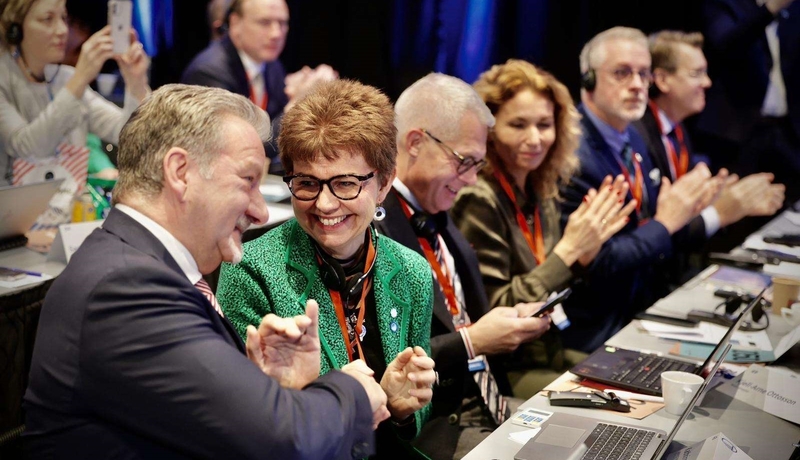
Meeting in Reykjavík for the 76th Session of the Nordic Council, members recommended that their governments renew the Helsinki Treaty. The proposal will now be considered at national level, and the governments will submit a joint response via the Nordic Council of Ministers.
“Nordic co-operation needs a ‘constitution’ that keeps pace with the times and reflects contemporary society. Updating the treaty is crucial to the ongoing dynamism of that co-operation,” says Bryndis Haraldsdóttir, President of the Nordic Council.
More binding wording on working together
The proposal stresses the need for clearer wording about the role of official Nordic co-operation in promoting Nordic values and views in the EU and EEA. It also calls for more binding wording about working together on drafting and implementing new rules. In June 2023, the Presidium set up a broad-based working group with representatives of all eight Nordic parliaments, five party groups on the Nordic Council and the Nordic Youth Council. Based on the work of this group, the Council now recommends that the governments set up a commission to draw up a concrete proposal for an update to the treaty. The recommendation includes proposals for new articles as well as updates to existing ones.
Nordic co-operation needs a ‘constitution’ that keeps pace with the times and reflects contemporary society. Updating the treaty is crucial to the ongoing dynamism of that co-operation.
Historic opportunity to develop co-operation
Renewing the Nordic ‘constitution’ – the Helsinki Treaty – provides a historic opportunity to revitalise and develop co-operation in ways that benefit all of the people and countries in the region. Crucial areas of current work such as the climate, nature and sustainability are not even mentioned in the treaty, although there is a section on the environment. Other topics not covered include defence, contingency planning, societal security and digitalisation.
International relations have changed fundamentally since the treaty was signed; for example, Finland and Sweden have now joined the other Nordic countries as NATO members. The language used in the treaty is also outdated and does not reflect modern usage.