Young people disappointed by funding decisions at COP29 – next point, national action plans
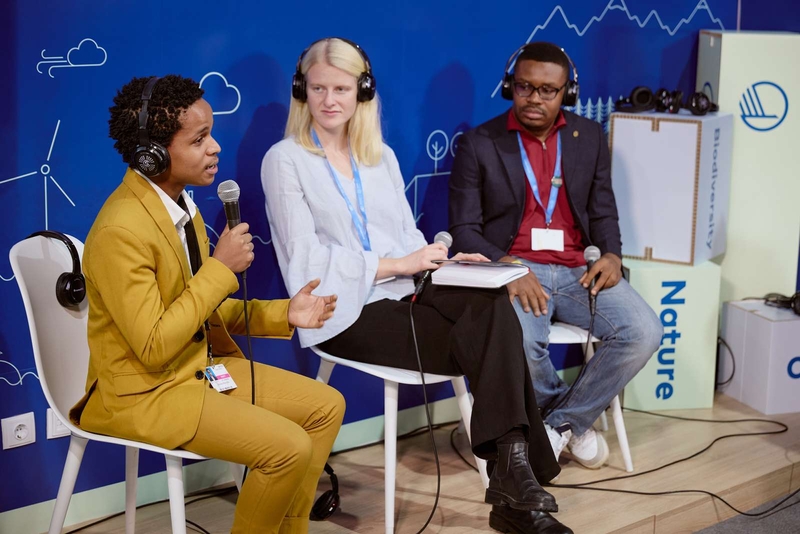
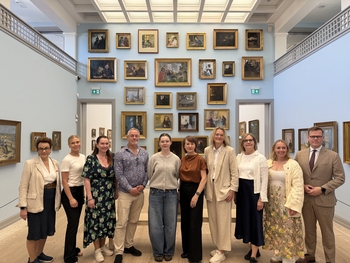
Sibusiso Mazomba, Lise Coermann Nygaard och Uchenna Igwe.
Sibusiso Mazomba, Lise Coermann Nygaard, and Uchenna Igwe
Young people disappointed
Several of the youth delegates who took part in discussions at the Nordic Pavilion expressed concern that the outcome of COP29 seemed to be a lack of agreement on the proposed sum of USD 300 billion required for the climate fund.
“I’m disappointed that the partners in the negotiations seem to be further apart from each other than previously thought, and I’m afraid that this will lead to mistrust, which will further widen the gap between the Global South and the Global North,” says Denmark’s youth delegate Lise Coermann Nygaard.
She is backed up by South Africa’s youth delegate Sibusiso Mazomba, who points out that it’s the poor countries that are most affected by climate change, and so the rich countries that are causing the most emissions should take responsibility.
“We need global justice,” he says.
He also says that young people should be allowed to play an even greater role at the negotiating table.
Uchenna Igwe from the Centre for Journalism Innovation and Development says that it’s high time for the rich countries of the Global North to realise how climate change is already affecting the lives of millions.
“The issues are creeping ever closer to the home turf of the Global North, too,” he adds.
Negotiators demand action
During the last day of COP29, Sweden’s chief negotiator Mattias Frumerie also visited the Nordic Pavilion. With negotiations still ongoing, he maintained that some form of solution will be reached, but pointed out that it will involve significant compromises that many people will be disappointed by. He also pointed out that progress is slow.
“If you look at it from a slightly longer-term perspective, before the Paris Agreement in 2015 we were on the way to global warming of more than 4 degrees, while the outlook with current measures indicates 3 degrees. Although there’s still a long way to go to achieve the 1.5 degree limit, we have at least made good progress.”
National plans decisive in 2025
COP30 will be held in Brazil next year, by which time all member countries must present detailed national plans for reducing their emissions. Mattias stresses the importance of doing this as quickly as possible, and of agreeing on a system for evaluating the plans going forwards.
“We have to focus more on implementing the agreements that have already been made, and the rich countries must take due responsibility. We must be able to demonstrate that our efforts will lead to better and more sustainable societies, also from their perspective.”
Lise Coermann Nygaard also hopes that the countries will deliver their national plans on time and that these plans will be ambitious. She also has an idea for concrete long-term efforts to achieve the 1.5 degree limit.
“There needs to be climate education in all schools to give young people a clear picture of the impact of climate change and what’s required to stop it,” she says.