
Carina Karlsson
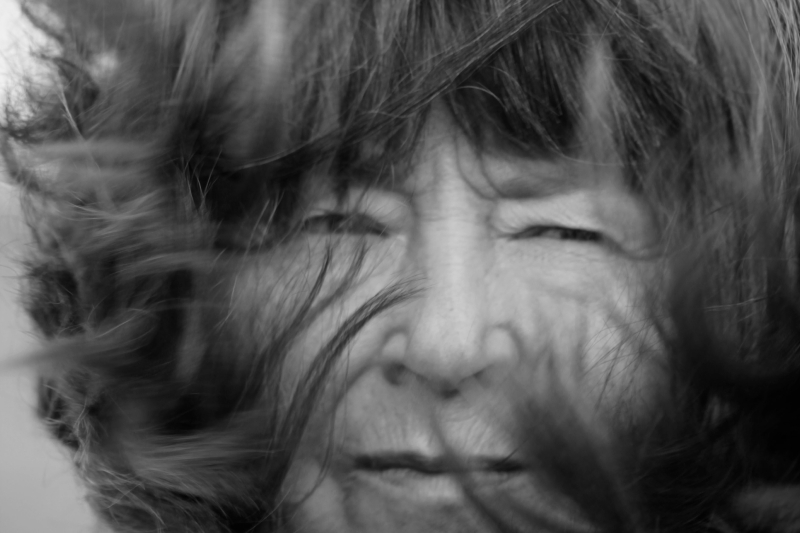
As a telegraphist of emotions, the Ålandic author Carina Karlsson emerges in the poetry collection Marconirummet ('The Marconi Room', not translated into English). The title refers to the Italian inventor Guglielmo Marconi, who developed the first radio transmitters – vitally important for all maritime navigation across the globe’s vast oceans. In windowless, soundproof rooms, contact was established with the world beyond the ship. Messages tapped out in Morse code became a lifeline for the crew – but also for their families in distant homelands.
Around this theme, Carina Karlsson weaves a dense tapestry of words, where the seaman’s wife’s life of longing and worry – a classic theme in Ålandic literature – is described with almost painful intensity. What’s happening out at sea? Daily life is marked by fear that the mythical seventh wave, stronger than any other, will lead to catastrophe. How can a seaman’s family ever maintain social balance? When the father returns after long absences, his young daughter no longer recognises him. Drinking becomes a means of escape from the loneliness, a way “to endure the distance between who we want to be and our lives.”
“There is an island called Sorrow,” writes Carina Karlsson. And her poems are filled with anxiety, melancholy, frustration, and protest, sending out “distress calls on all channels.” Critics have called her a salt-sprayed Edith Södergran, also drawing comparisons with Tua Forsström.
Yet, Marconirummet also contains luminous depictions of sibling bonds in a childhood landscape, where the water makes everything shimmer like silver. It’s about finding a way back, through the chaos of adulthood, to that feeling where “time slowly flows through the body.” Beyond realism, the poems take shape as existential snapshots, carried by a deep seriousness.
Carina Karlsson, born in 1966, grew up and still lives in Sund, Åland. In 1996, she debuted with the poetry collection Lisbeta, Per Skarps hustru (not translated into English) and has since written around ten books in various genres. She frequently collaborates with musicians and visual artists on interdisciplinary projects. Her novel Märket (2019), about the Ålandic witch trials in the late 1600s, gained widespread attention. Karlsson has received multiple literary awards and was previously nominated for the Nordic Council Literature Prize for her novels Mirakelvattnet (2015) and Algot (2017) – neither of which have been translated into English.