Vision 2030: The Nordic Region will become the most sustainable and integrated region in the world
Our vision is that the Nordic Region will become the most sustainable and integrated region in the world by 2030. The co-operation in the Nordic Council of Ministers must serve this purpose.
To achieve our vision, we will prioritise:
- A green Nordic Region – together, we will promote a green transition of our societies and work towards carbon neutrality and a sustainable circular and bio-based economy.
- A competitive Nordic Region – together, we will promote green growth in the Nordic Region based on knowledge, innovation, mobility and digital integration.
- A socially sustainable Nordic Region – together, we will promote an inclusive, equal and interconnected region with shared values and strengthened cultural exchange and welfare.
In the Nordic Region, we have shown time after time that we are stronger together.
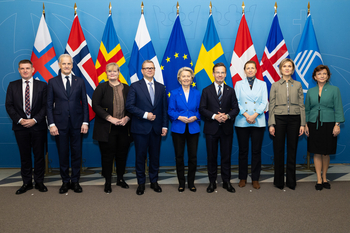
The Nordic prime ministers share a vision of the Nordic Region being the most sustainable and integrated region in the world by 2030. This important and challenging vision requires close political co-operation. Nordic co-operation needs to address multiple challenges, including geopolitical tensions close to our part of the world, the climate crisis, threats to biodiversity and the environment, the digital revolution, ageing populations and poor well-being among young people, all of which call for measures to future-proof our societies.
Time and time again, the Nordic Region has shown we are stronger when we think collectively and work holistically.
The 14 sectoral programmes have a common focus, clear priorities and targeted initiatives. They are informed by input from business, research, civil society, young people and, not least, the inter-parliamentary work done by the Nordic Council.
Her er en kort sammenfatning:
- Integrated contingency planning makes the Nordic Region robust
- Culture, democracy and active citizens
- Mobility, exchange programmes and networking foster cohesion
- Innovation and skills bring growth and prosperity
- New technology requires balanced solutions
- Sustainable resource management is key
- Nordic solutions and leadership at regional and global level
Looking closely at all of the programmes for Nordic co-operation up to 2030, I do not doubt for a second that the Nordic region will be stronger as we enter the next decade.
In autumn 2020, the Ministers for Co-operation adopted an action plan for Vision 2030 covering the years 2021–2024. The plan set out three strategic priorities and 12 objectives, which have formed the basis for all of the Nordic Council of Ministers’ work on the vision.
The Council of Ministers commissioned Rambøll Management Consulting to compile reports on the Region’s progress towards Vision 2030. These reports indicate that the Region is well on its way, with substantial progress toward the strategic priorities of competitiveness and social sustainability. However, they also indicate that substantial challenges remain to be addressed if the Region is to fulfil its green ambitions.
Evaluations of the work done by the Nordic Council of Ministers on Vision 2030 confirm significant results and effects in relation to the three strategic priorities and 12 objectives outlined in the action plan for 2021–2024.