Greenwashing and overconsumption: the fashion industry is still a problem
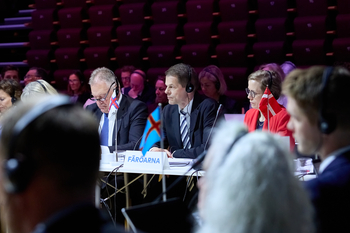
The Nordic Council has unanimously adopted a recommendation to make the fashion industry greener. It calls on the national governments to ensure consumers receive better information; to combat misleading marketing and greenwashing in the fashion industry, and to guarantee good working conditions in the textile industry. The Nordic Youth Council drew up the original proposal, which the Nordic Council Committee for a Sustainable Nordic Region then worked on.
Nordic consumers are major offenders when it comes to clothing. We buy more per capita than the global average, and only a small proportion of what we donate to recycling schemes is actually reused in Nordic countries. EEA reports show that large quantities of unwanted textiles are shipped from high-income countries to low-income ones (1.7 million tonnes in 2019). A McKinsey study also shows that garments are worn an average of 7–8 times before they are thrown out, and that less than 1% of what we throw out is recycled in a circular manner.
The situation prompted the Nordic Youth Council, the forum that brings together the youth wings of political organisations in the region, to call for action.
Most consumers want to make more sustainable choices, but understanding what goes into products is too difficult. We can’t expect individuals to know everything about the whole production chain. It’s time for a more transparent system to help consumers make better decisions.
Should responsibility rest with the manufacturers?
Globally, we churn out large volumes of new textiles, 62% of which are made from synthetic materials derived from fossil fuels, which affect the climate and CO2 emissions. Low-quality items wear out quickly, so mass production of them drives up consumption and harms the environment and climate. In Europe, we incinerate up to 600,000 tonnes of textiles each year. The EU’s textile strategy – Waste Framework Directive: ‘A more sustainable use of natural resources’ – seeks to hold manufacturers to account and set requirements to reduce the enormous quantities of clothing produced, destroyed and exported. The Directive was followed in 2024 by a call for Nordic co-operation to draw up ‘principles for textile manufacturers’ responsibility’.
It is important that consumers are better informed
If we want a greener, more sustainable fashion industry, we need to make it easier for consumers to tell whether products are made from more responsible, sustainable materials, so they can make informed choices. All too often, the industry’s greenwashing and misleading marketing lead consumers to buy products that are not particularly sustainable.
A new EU directive comes into force in September, focusing on providing consumers with more information about product sustainability. It is an issue that the Nordic Region also needs to address. We may already have the tools and just need to use them properly.
Could the Nordic Swan Ecolabel step in?
In 1989, the Nordic countries set up a voluntary eco-labelling scheme, the Nordic Swan Ecolabel, which 97% of people in the region now know about. The Swan is the official ecolabel of the Nordic countries and one of the strictest forms of environmental certification in the world. Could it be a solution for clothing, textiles and leather? Textiles with the Nordic Swan Ecolabel are already on the market, yet relatively few Nordic clothing brands have this certification, which is thought-provoking given how many fashion giants are based here. Nordic consumers trust the Ecolabel, which appears on a wide range of goods, including paper, cleaning products, and personal care products.
A survey by Opinion shows that 8 out of 10 Nordic consumers interested in clothes would choose Swan-labelled clothing and textiles if available. More than half would even pay extra for them. There is potential to use the label more widely in the fashion sector. The demand is there, and consumers already trust the label.
The Nordic Swan Ecolabel is an independent third-party certification scheme that sets requirements for the entire life cycle of products. For textiles, this includes strict criteria to ensure they are designed for recycling. Chemicals used in textile production must meet rigorous environmental and health standards and must not contain plastic or solely decorative components. Manufacturers must quantify the amount of microplastics released when synthetic textiles are washed; they are banned from incinerating unsold clothes; they must comply with specific fibre requirements; and they must comply with the UN (ILO) conventions on workers’ rights.
The Nordic Ecolabel website features certified textiles and a case study of the work done by Dilling (a Danish company) with the scheme and the benefits it has brought them.
Characteristics of Swan-labelled textiles
- They must be made from fibres that are organic, recycled or derived from renewable raw materials. They must also meet specific environmental standards.
- To make wastewater cleaner, any chemicals used in textile production must meet strict environmental and health standards. This benefits both manufacturers and consumers. Prohibited chemicals include endocrine disruptors and suspected endocrine disruptors listed by the EU and national authorities, flame retardants, fluorinated substances and antibacterial additives, including nanoparticles.
- The production process must use water and energy efficiently.
- To ensure a long lifespan, textiles must undergo quality testing, including for shrinkage, stretch, colour and durability.
- All components, e.g. zippers and buttons, must meet strict requirements for lead content, and all plastic parts must be phthalate-free. And contains only phthalate-free plastic parts.
- The working conditions in production facilities must be fair and comply with the UN (ILO) conventions on workers’ rights.
- To discourage overproduction, manufacturers must not incinerate unsold items or dispose of them in landfill sites.
What we know about textile production in the Nordic Region
The Nordic Council of Ministers’ Vision 2030 addresses sustainable resource management. Work on this includes several studies of the Nordic textile sector and a major circular-economy initiative examining sustainable value chains. The Nordic Council of Ministers will now discuss the Nordic Council’s recommendation.
Further info and resources
Official Nordic co-operation has a long history of work in the textile sector. Examples include The Nordic Textile Collaboration' and several reports available via the links below.