COP30 side event highlights Nordic leadership in building resilient food systems and circular bioeconomy
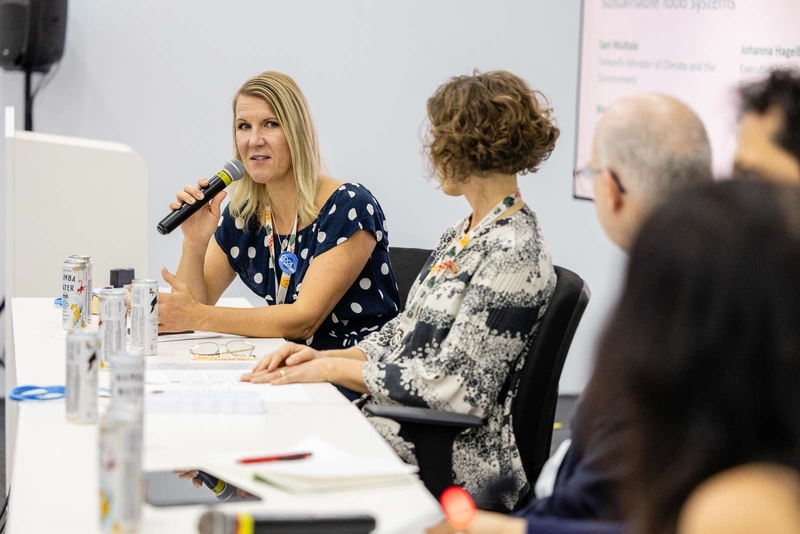
Sari Multala, Finland’s Minister of Climate and the Environment
Food systems at the heart of climate action
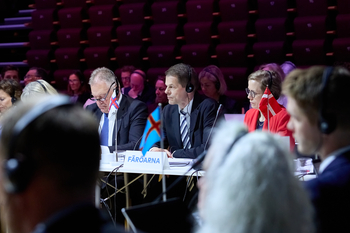
Opening the session, Karen Ellemann, Secretary General of the Nordic Council of Ministers, stressed the Nordic ambition: “We want this event to be a steppingstone to ensure that food and bioeconomy is on our common agenda, making sure that food systems will deliver safe, nutritious, and sustainable food for all,” she stated. While Nordic countries are frontrunners in sustainability, Ellemann acknowledged that the Nordic countries still have a long road ahead and a lot to learn from each other.
She also emphasized the declaration by the Nordic Ministers for Fisheries, Aquaculture, Agriculture, Food, and Forestry on the opening of COP 30 that underlines the potential of food systems and bioeconomy to address climate change through both mitigation and adaptation.
Finland’s Minister of Climate and the Environment, Sari Multala, highlighted the Nordic Nutrition Recommendations as a cornerstone for sustainable diets: “The Nordic Nutrition Recommendations are key in enabling sustainable food systems in the Nordic region,” she explained. In Finland, all public meals in schools and institutions already follow the recommendations, ensuring healthy and climate-friendly choices.
Multala also talked about the importance of transitioning Finland’s bioeconomy: “Forests have long been our main natural resource. Today, we need to find ways to create more added value from this resource, while ensuring it is used sustainably and supports a circular economy.”
Complex transitions require both science and policy
Speakers agreed that transforming food systems is complex and must be science-driven. Jean-François Soussana from the Scientific Advisory Committee of the UN Food Systems Coordination Hub warned: “We are failing with our food systems— nutrition gaps, rising chronic diseases, and inequalities persist.” He called for approaches that bring together climate, biodiversity, and social factors, drawing inspiration from indigenous practices that combine sustainability with carbon storage.
Innovation and private sector engagement
Johanna Hagelberg from the Finnish-Swedish forest industry company Stora Enso, showcased how their fiber-based packaging supports circularity. “We plant more trees than we harvest, and our packaging circulates up to 94% in Europe,” she explained.
Bernhard Mauritz Stormyr from Yara International, a Norwegian company that develops crop nutrition and agricultural solutions, highlighted efficiency as a climate lever: “Globally, 35% of nutrients are lost to the environment. We have tools to help farmers use less resources and reduce emissions,” he said. Yara is investing in low-carbon fertilizers, carbon capture facilities, and renewable energy-based production, showing how policy incentives such as carbon pricing can help unlock large-scale decarbonization projects worth billions.
Key challenges: risk, equity, and scaling
Panelists agreed that de-risking the transition is critical. Farmers are often stuck in existing supply chains, which makes big changes expensive and risky. Soussana argued for public procurement and carbon pricing to reward climate-smart practices, while Jelle Van Loon from CIMMYT emphasized the importance of making innovation accessible and inclusive, stressing that mechanization and digital tools must be adapted to local contexts and literacy levels. He also added that women farmers, who often are excluded from decision-making, need targeted support.
Hope and next steps
Despite the big challenges, optimism prevailed. “The wish for collaboration gives me hope,” said Johanna Hagelberg, citing Stora Enso’s partnerships with indigenous communities in Brazil and Venezuela. Sari Multala highlighted Finland’s plan to boost research and development spending to 4% of GDP by 2030, enabling breakthroughs such as producing protein from electricity and air, a potential game changer for global food security.
The message from the discussion was clear: bioeconomy and food system transformation are indispensable for meeting climate goals. Reaching these goals will take strong policies, science-driven solutions, and close cooperation across sectors and borders. As Jean-François Soussana concluded: “Everything needs to move together—and science can help with systems thinking.”