Expert advice and new framework to reduce gaps in Nordic integration

Labour market and learning the language
Foreign-born residents in the Nordic Region continue to struggle to get a job compared to their native-born peers. Integration in the labour market is, therefore, a focal point in all the Nordic countries right now. New figures show that foreign-born women in particular are more deeply impacted by unemployment in several of the Nordic countries. Even second-generation migrants, especially women, struggle to access the labour market.
Language learning is also seen as an important tool for integration in the Nordic Region. Several of the Nordic countries have tightened requirements when it comes to language learning among new immigrants in order to avoid the creation of groups of linguistically and culturally isolated immigrants, as well as to facilitate integration in the labour market.
Personal adaptation and personal responsibility
In recent years, the focus of Nordic integration policy has shifted towards migrants’ own responsibility for supporting themselves and becoming part of society. At the same time, several of the Nordic countries have introduced personal integration plans for newcomers, with an emphasis on areas such as education or work based on individual needs.

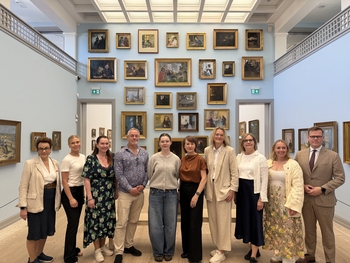
Karen Ellemann, Generalsekreterare i Nordiska ministerrådet, Katrine Bang Nielsen, kontorschef, ministeriet för immigration och integration, Danmark, Kjersti Stenseng, Arbets- och inkluderingsminister, Norge, Arsim Zekaj, Social- och hälsovårdsminister, Åland, Mari Rantanen, inrikesminister, Finland, Adam Alfreddson, Statssekreterare till integrationsministern, Sverige, Ásdís Halla Bragadóttir, departementchef, social- och bostadsministeriet, Island
Karen Ellemann, Secretary General of the Nordic Council of Ministers; Katrine Bang Nielsen, Chief of Staff, Ministry of Immigration and Integration, Denmark; Kjersti Stenseng, Minister of Labour and Social Inclusion, Norway; Arsim Zekaj, Minister of Social Affairs and Health, Åland; Mari Rantanen, Minister of the Interior, Finland; Adam Alfreddson, Secretary of State to the Minister for Employment and Integration, Sweden; Ásdís Halla Bragadóttir, Permanent Secretary, Ministry of Social Affairs and Housing, Iceland
Complex challenges require knowledge-based decisions
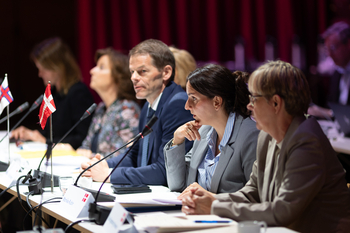
The meeting of the Nordic ministers responsible for integration was hosted in Helsinki by Finland’s Minister of the Interior Mari Rantanen and Åland’s Minister of Social Affairs and Health Arsim Zekaj. They stress the importance of knowledge-based integration efforts in the Nordic Region:
“In a time of increasingly complex societal challenges, it’s vital that we understand how integration evolves by using comprehensive indicators to monitor and draw comparisons between the Nordic countries and regions. We believe that integration policy rests on four pillars: language learning, establishment in the labour market, social orientation, and respect of laws and regulations. Moreover, in line with the shared vision of the Nordic Region being the most sustainable and integrated region in the world by 2030, we see integration as being pivotal in a sustainable society. Through collaboration and sharing our knowledge, we can strengthen our ability to tackle future challenges together,” said Rantanen and Zekaj in a joint statement.