When pensions don’t reflect working life
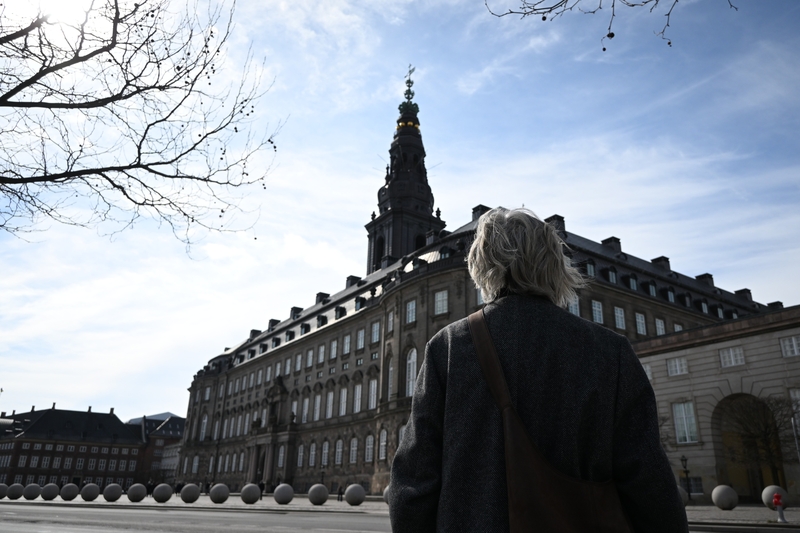
Astrid paid taxes and pension contributions in the countries where she worked. In short, she did what Nordic politicians encouraged people to do. When she retired, she didn't expect any reward for her flexibility, but she did expect a pension that was predictable. Instead, she encountered a system that didn’t have all the details of her working life or of the pension due to her.
Her pension entitlement was split between national jurisdictions. She had rights in theory, but in practice it was up to her to pin them down.
“I found myself re-telling my story time and time again, to different agencies, in different countries. Nobody had all the details,” Astrid explains.
What should have been a smooth transition to retirement turned into a long and uncertain process. What rights did she have? How much would she actually receive? And when?
It’s unreasonable to expect ordinary people to act as project managers for their own pensions, just because our systems don’t talk to each other.
A familiar pattern
Astrid’s story is by no means unique. On the contrary, it is a clear example of a pattern that affects an increasing number of people in the Nordic Region.
A new pension report, commissioned by the Nordic Council and the Nordic Council of Ministers, reveals that more than a million people in the Region have worked in more than one of the countries at some point during their working life. When they retire, many of them face the same obstacles as Astrid – lack of overview, unclear answers and systems that don’t talk to each other.
The individual sees their working life as a single coherent story. Official bodies often see it as a number of national fragments. And that’s the root of the problems.
The report, written by Resonans Nordic and KMPG, describes how individuals often have to make countries exchange information, e.g., old employment records, an overview of tax and pension contributions paid, clarification of who is actually responsible for paying the pension.
For Astrid, this meant months of toing and froing with various agencies. Not because anyone was refusing to pay her pension, but because the systems weren’t joined up. This lack of coherence is precisely what worries the chair of the Nordic Council Committee for Growth and Development in the Nordic Region, Kjell-Arne Ottosson.
“It’s unreasonable to expect ordinary people to act as project managers for their own pensions, just because our systems don’t talk to each other. It shouldn’t be up to the individual to sort it out. The national systems should work together,” he says.
A downside to freedom of movement
The Nordic governments have spent many years encouraging people to be mobile, and freedom of movement in the labour market has been a success. People have been able to move to where jobs are available, safe in the knowledge that the welfare state provided a safety net. However, the report shows that this mobility has a downside when you retire.
“We like talking about freedom of movement in the Nordic countries. But that means we need to assume responsibility for the consequences of people actually being mobile. It’s unacceptable to make fine rhetorical flourishes in political speeches and then shirk responsibility when the time comes to pay pensions. That makes people feel unnecessarily insecure,” he adds.
For Astrid, the problem became very real. She didn’t feel she fell outside the system. She felt she fell between systems.
“I received a lower pension as a result of the double taxation agreement, partly because Denmark deducts around 50% tax per month. Some of that tax is refunded after you submit your annual tax return. But that means a delay in settling your annual tax in Sweden. And the administrative work involved is still extensive and is repeated year after year. You have to submit proof you are still alive. You have to submit tax returns in both countries. And you have to send details of your Danish tax returns to the Swedish Tax Agency,” Astrid explains.
A great many obstacles to freedom of movement, big and small, still need to be addressed.
A system lacking a holistic perspective
According to the report, the problems are rarely due to a lack of willingness on the part of the agencies involved. Most do what they can within their frames of reference. The challenge is that the those frames are national, while people’s lives are increasingly Nordic. The national pension systems are good, but lack a Nordic perspective. That leads to financial uncertainty for the individual concerned and unnecessary use of resources by the public sector.
“A Nordic working life requires a Nordic perspective on pensions. If we keep thinking about pensions in national terms, people will fall through the cracks. And there is no need for that to happen,” says Ottosson.
For Astrid, it’s not about politics or regulations. It’s about a sense of security at a time of life when mental and physical energy aren’t necessarily what they once were. Her case is far from unique. As more and more people in the Nordic Region move around to work, more and more of them will face the same challenges when they retire.
Today, Astrid would no longer recommend people work in another Nordic country.
“I really wouldn’t recommend it in the case of Denmark. A great many obstacles to freedom of movement, big and small, still need to be addressed.”
The report will be launched when the Freedom of Movement Group meets in Oslo on 16 April. It may not provide all the answers, but it clearly identifies a range of problems. It also makes it clear that the problem can’t be solved at national level. For people who have retired, pensions aren’t a technical issue. Pensions are their income. It’s a matter of feeling secure and trusting the welfare state.
If the pension system doesn’t reflect the realities of working life, that trust is put at stake.