Focus on preparedness and total defence when Presidium of the Nordic Council met in Iceland

“Iceland occupies a central strategic location in the North Atlantic. The visit to Keflavik Air Base provided valuable insight into both NORDEFCO and NATO co-operation, which are closely linked to the Presidium’s areas of work. That’s why it is highly significant that the meeting was held here,” said Dagbjört Hákonardóttir, head of the Icelandic delegation to the Nordic Council and member of the Presidium.
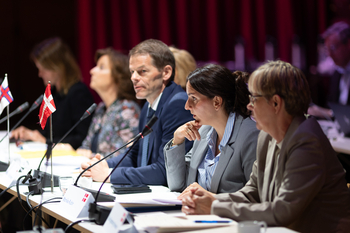
The visit to Keflavík set the stage for the meeting the next day, when the Presidium continued its consideration of a proposal to the Nordic governments to strengthen the role of total preparedness within Nordic co-operation. The proposal highlights the need for closer co-ordination of both civil and military preparedness now that every Nordic country is a member of NATO and the security situation in the region has changed significantly.
The proposal includes the Nordic Council recommending that the Nordic governments include the Faroe Islands, Greenland, and Åland in the Haga co-operation, and strengthen Nordic co-operation on exercises, supply lines, energy security, and logistics.
The Nordic Council’s strategy for societal security was unanimously adopted by the Nordic Council at its Session in Stockholm in 2019. Shortly afterwards, the COVID-19 pandemic demonstrated how poorly equipped the Nordic Region was for crises of this kind. Since then, the security landscape has changed dramatically.
The Presidium notes that the pandemic and the new security-political environment in the Nordic Region have highlighted the need for more robust and integrated total preparedness. A key element in the proposal is also to give civil society a clearer role in crisis management and to safeguard strategic stockpiles and stable supply lines throughout the Nordic Region, including the North Atlantic. The proposal will be further considered at the Nordic Council’s meetings in February in Roskilde.
The topic of the meeting is also linked to the Finnish and Ålandic Programme for the Presidency of the Nordic Council in 2026, under the title of “Nordic comprehensive security”.