Nordic co-operation on health discussed in Tromsø: Efforts to develop a joint strategy for elderly care
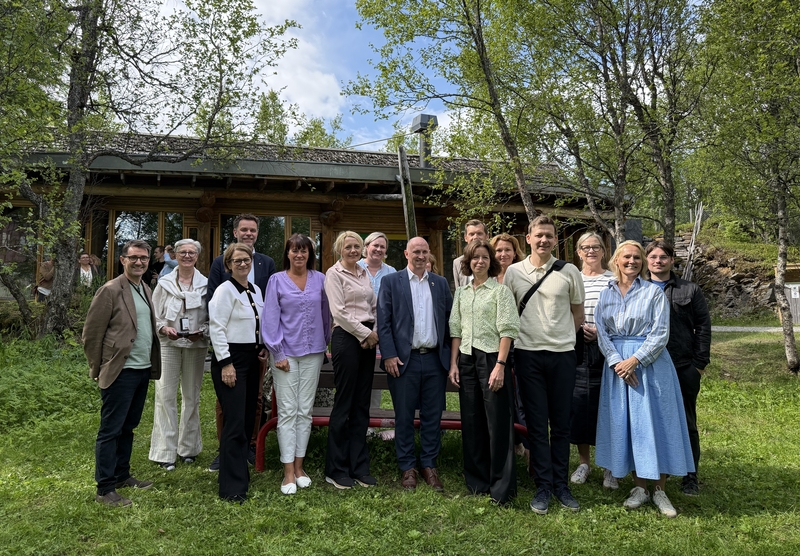
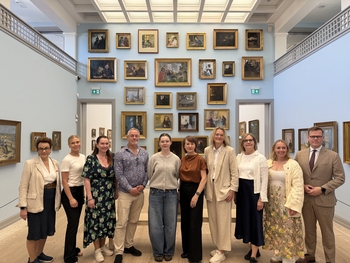
Utvalget for Velferd i Norden i Nordisk råd på sommermøte i Tromsø 2025
The Nordic Council Committee for Welfare in the Nordic Region at its 2025 summer meeting in Tromsø. The committee is gathered in front of Árdna, the university's Sámi Cultural Centre, together with researchers and the faculty from the University of Tromsø.
“Nordic co-operation on health is important because our countries share many common challenges, such as an ageing population, mental health issues, and lifestyle diseases. It's more effective to solve these challenges together,” says Tone Wilhelmsen Trøen, deputy chair of the committee and member of the Norwegian parliament, which hosted the meeting.
The committee agreed to proceed with a recommendation to the Nordic governments to develop a strategy for the future of elderly care in the Nordic Region. The strategy aims to promote inclusive and sustainable care for the elderly with a special emphasis on quality, a mobile workforce, digital inclusion, and empowerment of the elderly. The proposal has broad support from all party groups and will now be sent to relevant committees in the Nordic Council for their consultation.
Expert insights and northern perspectives
During the meeting, the committee visited the University of Tromsø, where researchers presented the challenges that the healthcare sector is facing in the far north, especially for elderly people who have to travel long distances for simple procedures. The presentations also highlighted an Indigenous perspective, where challenges are often compounded by language, distance, and culture.
The expert programme also included presentations on health data sharing, artificial intelligence in healthcare, and antimicrobial resistance (AMR). Nordic research co-operation was highlighted as being vital in the fight against the antibiotic crisis. Both AMR and elderly care are priority areas for the committee in 2025, as are efforts relating to vulnerable children and young people.
Young, Indigenous peoples, and local engagement
The committee visited the Tvibit youth centre, which has played a central role in efforts to make Tromsø the first Nordic city to be European Youth Capital in 2026. Tvibit has a special focus on youth participation and sees young people as a resource, not a problem. The centre is a good example of an inclusive public service with young people of all ages at its heart.
The Sami perspective was highlighted through visits to Árdna – the university's Sami cultural centre – and Tromsø Sámi House. Here, the spotlight was shone on Sámi rights, mental health, elderly care, and the need for cultural adaptation. Professor Torjer A. Olsen (UiT) and Managing Director of Sámi House, Jill Abelsen Olsen, offered their insights and perspectives.
The Sámi Parliamentary Council also participated in the meeting. Beaska Niillas from the council emphasised the importance of integrating the Sámi perspective into the committee's work and recommendations to the Nordic governments.
The way forwards
The meeting in Tromsø is part of the committee's efforts to strengthen Nordic welfare co-operation and to hone in on the committee's priority areas for 2025 – elderly care, antibiotic resistance, and vulnerable children and young people. The next step is to send the proposal for an elderly care strategy for consultation in the Nordic Council Committee for Growth and Development in the Nordic Region and the Nordic Council Committee for Knowledge and Culture in the Nordic Region before the proposal can be considered by the Nordic Council plenary assembly at the Session of the Nordic Council in Stockholm in the autumn.