Nordic Ministers for Gender Equality at the UN: “Nordic family policy creates safer societies”
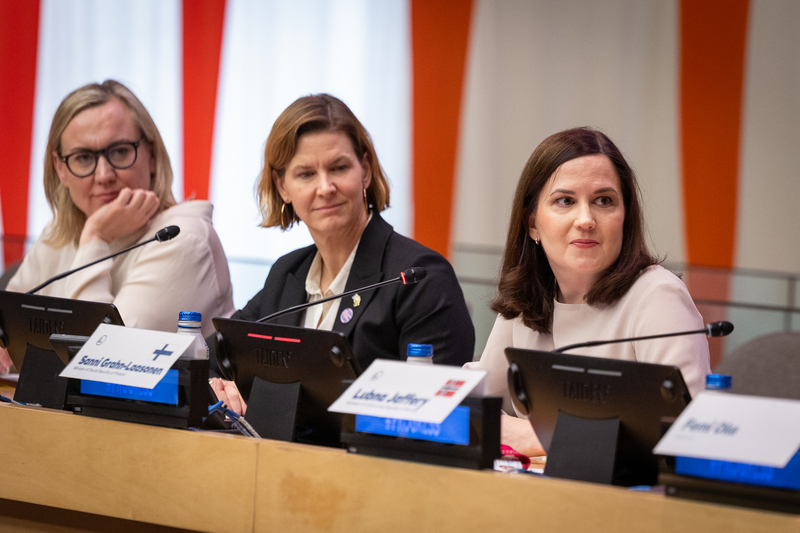
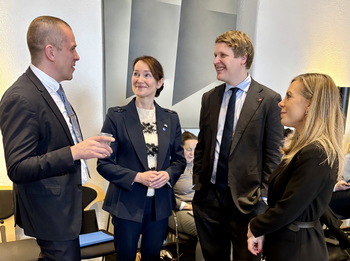
Þorbjörg Sigríður Gunnlaugsdóttir, Nina Larsson, Sanni Grahn-Laasonen
Þorbjörg Sigríður Gunnlaugsdóttir, Nina Larsson, Sanni Grahn-Laasonen.
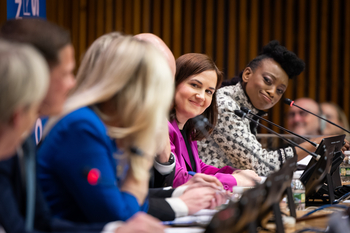
In recent years, there has been a noticeable setback in equality and in the rights of women and girls. The Nordic ministers aim to counter this through their initiative “Pushing for Progress.” At their keynote event during CSW, the ministers strongly rejected claims that gender equality, progressive family policy, and reproductive and sexual rights undermine traditional family values.
“Setting the wellbeing of families against equality creates a conflict that doesn’t exist – Nordic family policy proves that both families and society as a whole benefit from greater gender equality,” said Finland’s Minister of Social Security, Sanni Grahn-Laasonen.
Gender equality strengthens families
Norway’s Minister of Culture and Equality, Lubna Jaffery, emphasised that gender equality is not an ideology but practical policy that improves people’s day-to-day lives. She highlighted how nearly a year of paid parental leave and high-quality childcare increases women’s participation in the labour market and improves families’ financial security.
“Gender equality isn’t possible without economic security. Giving both women and men the opportunity to work and spend time with their children provides that security,” she said.
Iceland’s Minister of Justice, Þorbjörg Sigríður Gunnlaugsdóttir, also emphasised the impact of individual parental leave rights – a policy that is economically beneficial and also contributes to greater wellbeing in society.
“Gender equality is not only about equality – it’s also about the economy. In the Nordic Region we now tend to take this for granted, which is why we must remind ourselves why we have worked on these issues for decades,” said Gunnlaugsdóttir.
A foundation for prosperous societies
Minister Grahn-Laasonen noted that the focus of Nordic family policy is on ensuring that both children and parents thrive – among the concrete successes she highlighted were financial support for parents and high-quality early childhood education and care.
“I am myself an example of how gender-equal family policy makes it possible for a woman to have both a career and a family. I’m expecting my third child and I’m a minister – that’s nothing unusual in the Nordic Region,” said Grahn-Laasonen.
Nordic Region united in global gender equality efforts
Sweden’s Minister for Gender Equality, Nina Larsson, focused on digital environments and how algorithms reinforce harmful norms and disinformation. She stressed that the Nordic Region remains committed to defending past progress and continuing to push development forwards.
“We must regulate the digital world with age limits and similar measures, and we need to be aware of all the forces trying to reshape the narrative on gender equality and push it in the wrong direction,” said Larsson.
International gender equality meeting in Copenhagen this autumn
The ministers also presented plans for the Copenhagen Summit, where the countries of the Nordic Region will gather like-minded countries and partners this autumn to counter setbacks and strengthen gender equality internationally.