Research-based proposals for stronger Nordic co-operation on media
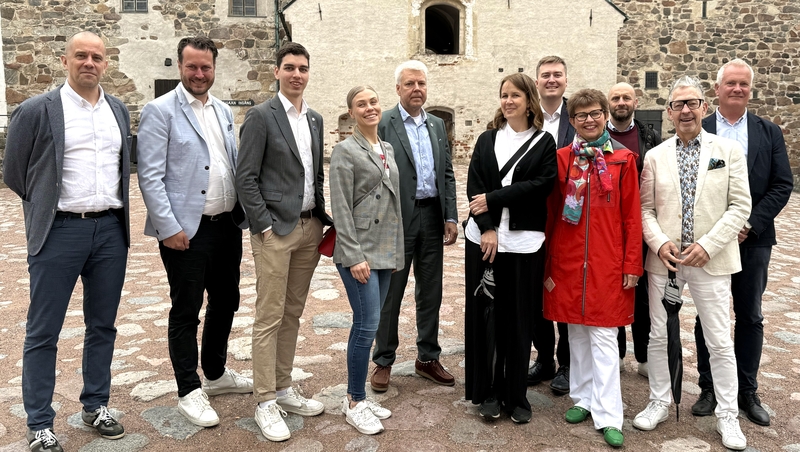
Utskottet för kunskap och kultur i Norden under sommarmötet i Åbo
The Committee for Knowledge and Culture in the Nordic Region outside Turku Castle during its summer meeting.
At the committee’s summer meeting in Turku, a member proposal from the Centre Group was discussed, focusing on strengthening Nordic co-operation to support independent and investigative journalism. The meeting was attended by Tobias Lindberg, a researcher at Nordicom, the Nordic Information Centre for Media and Communication Research at the University of Gothenburg, who – based on the proposal by the Centre Group – presented concrete measures to address the challenges facing the Nordic media landscape.
Few regions in the world are as digital as we are in the Nordic Region
The proposal emphasises that people’s access to accurate information, independent journalism, and a fact-based public debate is crucial for a well-anchored and well-functioning democracy. At the same time, there is growing concern about so-called “news deserts” – regions where access to local journalism is limited or non-existent. According to several reports, this phenomenon is also becoming increasingly apparent in the Nordic countries.
The committee expressed concern about a trend where local news outlets are disappearing at an ever-faster pace, while trust in traditional media is challenged by disinformation and the influence of tech platforms.
As part of the meeting’s programme, Lindberg presented three concrete proposals to the committee:
- Conduct a Nordic mapping of the media landscape
The study will identify good examples of how to promote high-quality, independent, and ethically sound journalism in the Nordic Region. It will also examine the impact of existing media support schemes and report on what has worked well. - Establish a Nordic think tank on the future of journalism
Lindberg’s proposal includes inviting experts, media stakeholders, and decision-makers to a joint roundtable discussion for exchanging ideas and engaging in solution-focused dialogue. The initiative could build on previous experiences from theNordic Council of Ministers’ work on the impact of tech giants - Analyse the impact of the European Media Freedom Act
New EU legislation may affect both policy and news operations in the Nordic countries. A dedicated analysis is proposed to monitor how the law is implemented and what changes it brings.
We must take responsibility to ensure that development goes in the right direction in the Nordic Region as well. Journalism is a cornerstone of our democracy, and we want to see the Nordic Council of Ministers take clear steps to safeguard its future.
Focus on joint Nordic solutions
The Centre Group points out that although the Nordic countries generally rank highly in international press freedom indices, we must not take our free media for granted.
The proposal for enhanced Nordic co-operation, combined with the researcher’s three suggestions, was largely positively received by the committee, with a reservation from Nordic Freedom. The matter will be further addressed during the committee’s September meeting in Oslo.
During the summer meeting, the committee also discussed obstacles to freedom of movement, particularly regarding the taxation of culture-sector workers, and reviewed the Nordic Council of Ministers’ budget plan for 2026.