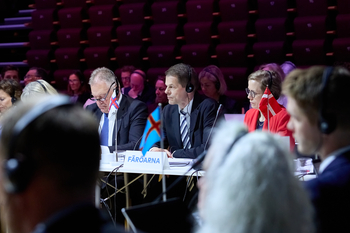
Stronger together – a new era for Nordic security and preparedness
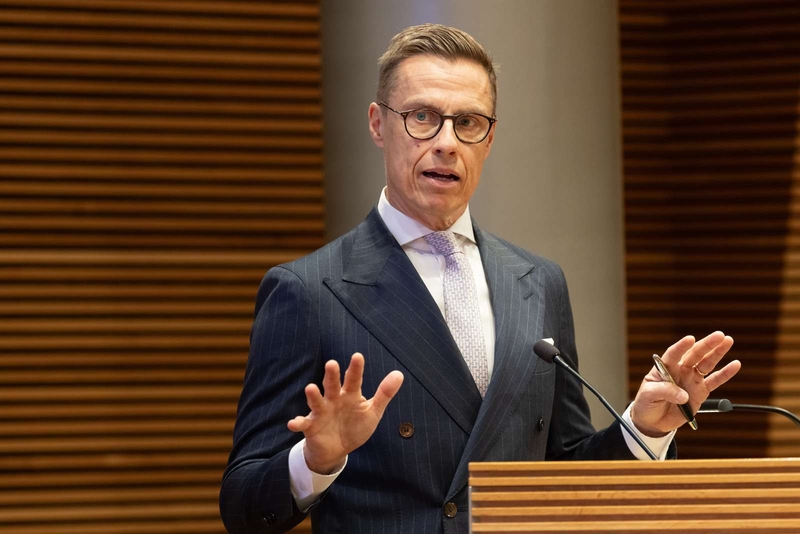
Finlands President Alexander Stubb taler foran Nordisk råds 87 parlamentarikere i Finlands Riksdag i Helsingfors.
Alexander Stubb, the President of Finland, addressing the 87 members of the Nordic Council in the parliament in Helsinki.
“Trust is the Nordic gold”
“The whole sea is stormy,” the President said, describing the uncertain situation in the world. He identified the combination of the Nordic sense of community and the co-operation between the countries as a solid rock during stormy times.
President Stubb also stressed that Nordic trust and the shared values on which our welfare states are based – democracy, the rule of law, human rights, equality and sustainability – are more important than ever and must be upheld, not taken for granted.
“Trust is the Nordic gold, our priceless, collective capital,” he added.
The Swedish Minister for Civil Defence: We need to improve preparedness and the supply infrastructure in the Nordic Region
The Swedish Minister for Civil Defence, Carl-Oskar Bohlin, then focused on the need for better preparedness in the Nordic Region, especially regarding supply chains, electricity supply and infrastructure.
“It’s high time we faced the fact that we live in a new paradigm, and the need to change with the times should be at the top of our agenda,” the minister said.
As well as the minister, several representatives of the Nordic Council also pointed out that preparedness is not just a matter of military strength; it also requires a robust social and economic infrastructure, as part of which the welfare state plays a crucial role. Several speakers also stressed the importance of including the whole of the Nordic Region – including Greenland, the Faroe Islands and Åland – in the work on preparedness.

The Swedish Minister for Civil Defence, Carl-Oskar Bohlin, has long advocated improving preparedness in his country. At the Theme Session, he stressed the importance of working together at Nordic and Nordic-Baltic levels to prepare for crises and, in the worst-case scenario, for war.
Security and preparedness are about more than just defence
The question and answer session and debate revealed broad political agreement on the need for the countries in the Nordic Region to work more closely together on total defence and preparedness. Several members of the Nordic Council also pointed out areas in which the Nordic Region still has work to do.
“When crisis strikes, we often look inwards. But we need to learn from the recent pandemic and set up formal and powerful Nordic co-operation on transport. We do not want closed borders in times of crisis,” said Kjell-Arne Ottosson, chair of the Committee for Growth and Development in the Nordic Region.
Emma Berginger, a member of the Committee for a Sustainable Nordic Region, pointed out that security is about more than just the ability to defend your country militarily.
“The climate, environment and nature crisis is also one of the biggest threats to security, and the Nordic Region must address it as one.”
Several representatives also stressed the role of the welfare state in total preparedness, especially in the fields of medicine and health. The chair of the Committee for Welfare in the Nordic Region, Eva Lindh, was one of the speakers to point out that the COVID-19 pandemic had exposed weaknesses in the co-operation on preparedness, weaknesses from which lessons must be learned.
In his opening address, the Finnish President, Alexander Stubb, described Nordic solidarity as our strongest defence in uncertain times. In the debate that followed, Veronica Honkasalo, a member of the Committee for Knowledge and Culture in the Nordic Region, highlighted that culture and education are central to civil preparedness – both for preventing crises and strengthening societies’ resilience.
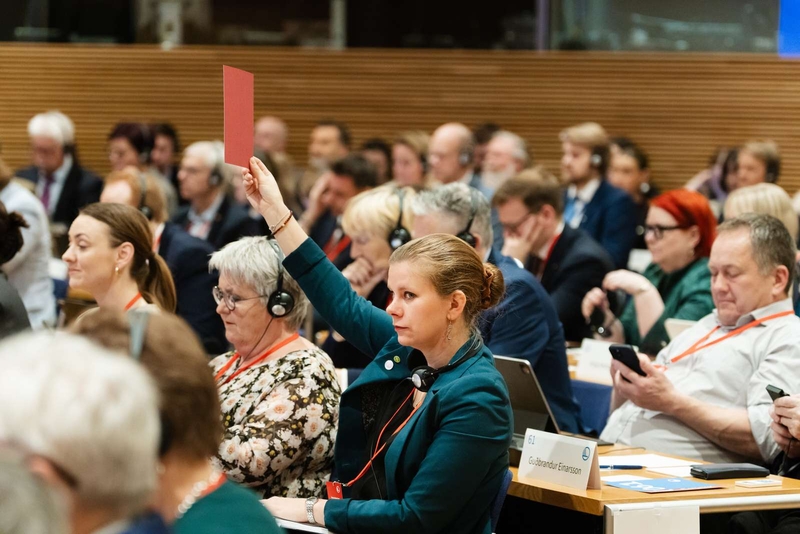
Emma Berginger of the Committee for a Sustainable Nordic Region requesting to speak in the plenary debate.
The way forward for the Nordic Council
The debate clearly demonstrated that official Nordic co-operation and the Nordic Council play crucial roles in fostering a sense of community among the Nordic countries in times of crisis and in everyday life. The Swedish Minister for Civil Defence, Carl-Oskar Bohlin, also pointed out the need to ensure that the bonds between the countries remain strong and underlined the importance of the Nordic Council as an institution in maintaining and improving working relations between them.
On Tuesday afternoon, the Presidium of the Nordic Council – its most important body – attended a NORDEFCO meeting in Helsinki along with representatives of the national parliaments’ defence committees and the Finnish Minister of Defence, Antti Häkkänen.
Closing quote from Pippi Longstocking
The Finnish President rounded off his speech with a well-known quote from children’s literature.
“Pippi Longstocking put it well – Someone who is very strong has to be very nice,” he said.
With strength comes responsibility, he reminded his listeners – a message as important for the Nordic Region as it was for Pippi.
The Nordic Council Theme Session 2025
During the Theme Session, the Presidium of the Nordic Council also discussed the response from the Nordic governments to the proposal to bring the Helsinki Treaty – the Nordic constitution – up-to-date and issued a statement in support of Greenland.