Sweden’s presidency of Nordic Council in 2025 to highlight Nordic everyday value and cohesion
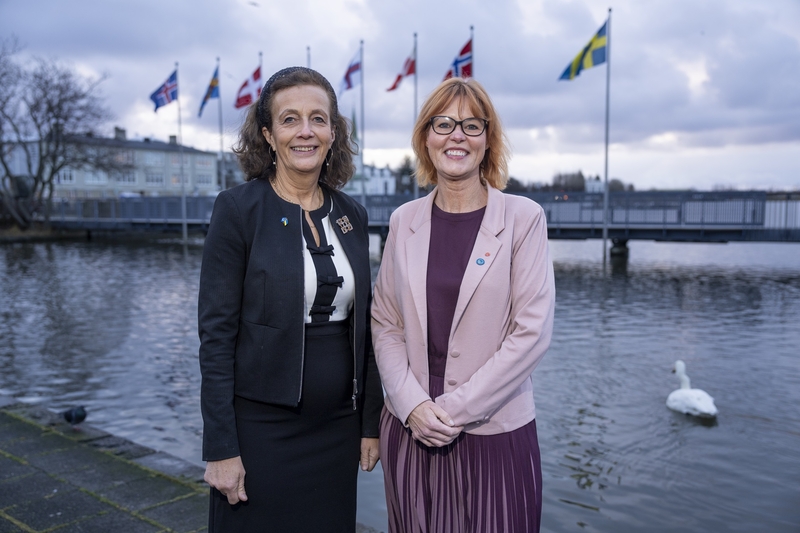
Vice-President and President of the Nordic Council in 2025, Maria Stockhaus and Heléne Björklund
Cohesion increasingly important in an uncertain world
According to Sweden’s presidency programme, global uncertainty is prompting closer co-operation and Nordic unity. Russia’s war of aggression in Ukraine, war in the Middle East, and the climate crisis are pushing safety and security even higher up the Nordic agenda for 2025.
“We live in troubled times, which means that cohesion and co-operation are more important than ever. We need each other in our Nordic family, and we want to continue to strengthen and develop our relations so that we can stand stronger together, even in times of crisis,” says Heléne Björklund, the newly elected President of the Nordic Council.
Nordic everyday value
In addition to the focus on security and unity, Sweden’s presidency will also highlight what it terms as Nordic everyday value. This relates to breaking down obstacles to freedom of movement, investing in knowledge and innovation, and promoting an integrated Nordic labour market.
“We’ll focus on the essence of Nordic co-operation, Nordic value, and our vision of becoming the most integrated and sustainable region in the world by 2030,” said the newly elected Vice-President of the Nordic Council, Maria Stockhaus.
Anchoring at national level is vital
The presidency programme states that Nordic issues are also domestic political issues. It’s important that the issues addressed by the Nordic Council are also anchored in the national parliamentary committees. The programme also points out the importance of the members of the Nordic Council being familiar with existing obstacles to freedom of movement, in order to be able to focus on making it easier for those living in the Nordics to live, work, and study in another Nordic country and for companies to be able to operate throughout the region.