
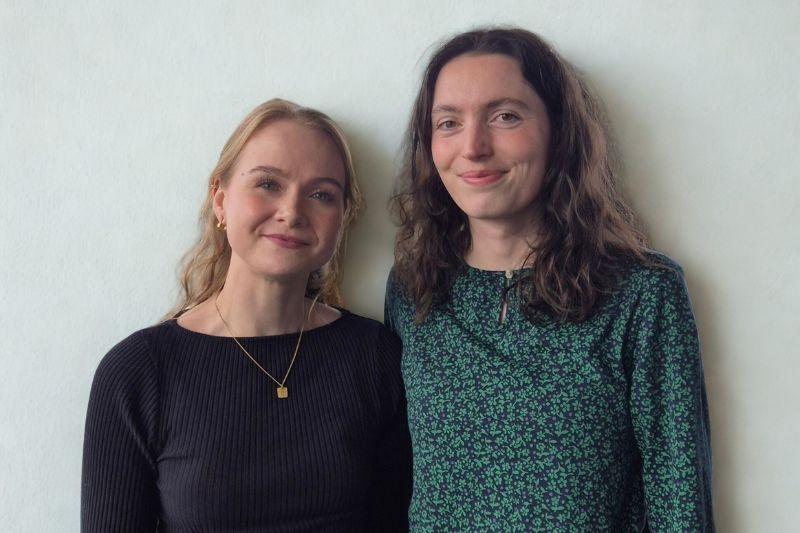
Diljá Hvannberg Gagu and Linn Janssen
Árstíðarverur (“Seasonal Creatures”, not translated into English) by Diljá Hvannberg Gagu and Linn Janssen is an unusually accomplished and richly illustrated children’s book in which the communication of knowledge is combined with creative joy and emotional warmth.
The story of Bjarni, who wakes up one spring morning to find the ground covered in snow – completely the opposite of what he had hoped for and been taught at school – quickly captures the young readers’ attention and sparks their curiosity. Iceland’s weather and seasons take centre stage in an original and accessible narrative, carried equally by words and images. The book not only conveys knowledge; it also radiates warmth and humanity. The experiences of Iceland’s changeable weather across generations are depicted with an empathy that evokes both smiles of recognition and sympathy.
The seasons appear to Bjarni in the form of wondrous creatures who, through their quarrel over control of the weather, become a metaphor for Iceland’s complex and often unpredictable climate. In Linn Janssen’s visual interpretation, each season wears a costume composed of characteristic vegetation, and autumn’s spectacles inevitably evoke associations with reading and the start of the school term.
This personification of the seasons – in the book called Summer, Winter, Spring, and Autumn – creates a strong connection between fantasy and reality, while also supporting the playful communication of knowledge. The opposites Summer and Winter are in conflict, while the intermediate seasons, Autumn and Spring, achieve little success in their attempts at mediation.
Shortly before Bjarni encounters the seasonal creatures, he takes part in a lesson where the pupils compete to list the advantages of each season. He brings this with him into his meeting with the creatures. He praises each of them for their qualities and convinces them that it matters less who’s in charge, and more that they take turns.
Some parts of the world experience similar weather all year round. In the Nordic Region, however, the transitions between seasons are strongly felt, and it is often said that they affect people’s well-being. In Iceland, daylight lasts around the clock in summer, while winter is characterised by darkness. The weather can change in an instant, and with it people’s plans. In such circumstances, the right mindset is essential – and that’s precisely what the book is about. Despite the apparent simplicity of the schoolboy Bjarni’s logical solution – that the best approach is to take turns – he succeeds, through active listening and wise advice, in helping the forces of nature to co-exist. In this way, the book also strengthens children’s sense of agency in a vast and often incomprehensible world in which they may otherwise feel powerless.
Diljá Hvannberg Gagu (b. 1994) is a children’s author and works as a bookshop manager at Penninn Eymundsson. She began writing as a child, and Árstíðarverur is her first children’s book.
Illustrator Linn Janssen (b. 1997), completed her studies at the Reykjavík School of Visual Arts in 2022. She has illustrated a number of children’s books, including Einstakt jólatré which was nominated for the Reykjavík City Children’s Book Prize in 2024.