
Pirkko Saisio
The novel Suliko (not translated into English) is a fictional biography of dictator Josef Stalin (1878–1953). The title refers to a love song with lyrics by Akaki Tsereteli and music composed by Varinka Tsereteli. The word “suliko” is Georgian for “soul”. In the poem it is also the name of the beloved, the one whom Stalin yearns for and worships in his loneliness.
The plot of the novel unfolds on two timelines. These are made up both of biographical backward glances which are reproduced by an omniscient narrator, and of Stalin’s own interleaved and increasingly paranoid demeanour. This begins on New Year’s Eve 1952 and extends to the time immediately after his death in March 1953. Throughout the story, he addresses Suliko.
The novel is preceded by a motto: “Since there is no god, I made a god. For myself / And of myself / Someone has to sacrifice himself.” Myth and saga feature in the depiction early on, like a paraphrased Bible quote. In this way, the portrait of the protagonist is further complicated. And this often happens in a somewhat forgiving light.
Saisio’s prose is both razor-sharp and sensual. The richness of detail in the rendering of different environments makes the reader feel like an eyewitness, experiencing every sight and sound, with the factory whistles and horses scraping their hooves against the deck as the steamer Oihonna runs aground outside Hangö udd.
In Suliko, the reader is treated to a shocking and challenging, almost treacherous reading experience in darkness and dim light, with footsteps outside the door and ever-growing piles of unread documents, suspicious underlings, and a dysfunctional family where the father sacrifices his son(!) and is in love with a ghost. It is notable that, due to its content, the novel is deeply current.
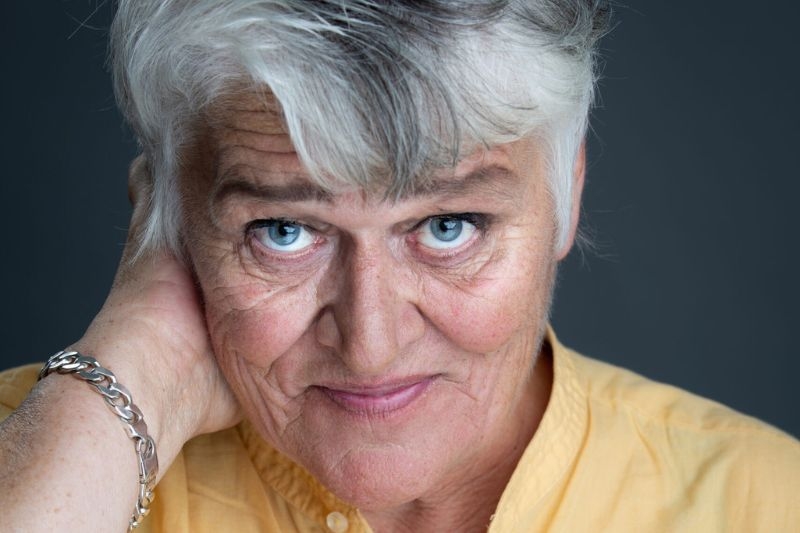
Pirkko Saisio (b. 1949) is among the giants of modern Finnish literature. Her work as a writer, director, actor, and lecturer at the Theatre Academy in Helsinki spans five decades. She has earned several accolades, including the Finlandia Prize for the autobiographical Punainen erokirja in 2003, and the Vartio Prize in 2025. Suliko was also awarded the Runeberg Prize in 2025.