
Sebastian Johans
Sebastian Johans’ Svanhopp. Roman om död far (Swan dive. Story of a dead father, not translated into English) is a somewhat different portrait of a father.It is immediately laid out that “he was not that middle-class father who talked about tennis and didn’t see his son as a person in his own right.”
Although he is intelligent and powerful, he just cannot get his day-to-day life together. He never manages to furnish the apartment that he moves into after divorcing his son’s mother in a way that resembles a normal home. He oscillates between hope and despair, bright moments and dark ones. His addiction escalates, his madness gallops, his large body grows ever larger. He feels sorry for himself, feels misunderstood by the world around him, and worries about failing in his role as a father.
But it is not about revelling in misery. Johans’ novel is a long way of the literary patricide that has permeated Nordic publishing in recent years. Instead, Svanhopp is a tender and finely tuned depiction of a father’s big heart almost overflowing with love: “The first thing I think when I hear that you’re no longer there is that no one will ever love me the same way as you,” remembers the son, the narrator.
Johans skilfully portrays that there are different ways to love, to be a parent, without putting the reader out on a limb. To invite himself to his son’s teenage parties and show young people how to mix wine, water, and cloudberry liqueur to keep the level of inebriation at just the right level is perhaps not entirely reasonable. But that’s just Dad’s way of showing concern, his unique way of being present and pedagogical while seeing his son as a person in his own right: “of course you want to get drunk if you’re young”.
As much as it is a portrait of an unconventional father, Svanhopp is also a beautiful storyabout an upbringing. In short scenes and with a striking tone, Johans portrays a childhood and adolescence in the island town of Mariehamn in the 1980s and 1990s, as well as everyday events which, in retrospect, appear to be saturated with meaning and significance.
This is effective and allows the reader to recall snapshots from their own upbringing which are then contoured by the flash lighting of the depictions in the book – even if they were brought up by someone entirely different.
The reminiscences are fruitfully alternated with scenes from the present, where the adult narrator addresses his relationship with his father with his therapist. There’s something that grates between the meddlesome Swedish therapist and the more blunt narrator, influenced by his not-always-so comfortable upbringing on the Åland archipelago. The depiction of the sometimes drastic childhood scenes also generates a certain laconic humour, as the narrator confesses to his therapist that it was certainly not entirely “optimal” that his father drugged him once.
In short, it is an unsentimental and beautiful portrayal of a father-and-son relationship, characterised by mutual respect and love despite the dysfunctional conditions. Although the father may be a partial failure in the eyes of society and his own, in his son’s eyes, brilliance shines through all of his father’s shortcomings. He is an intelligent, charismatic and, poetic bon vivant who is larger than life in all respects and who, defying all the laws of gravity, has an astonishing ability to perform the perfect swan dive.
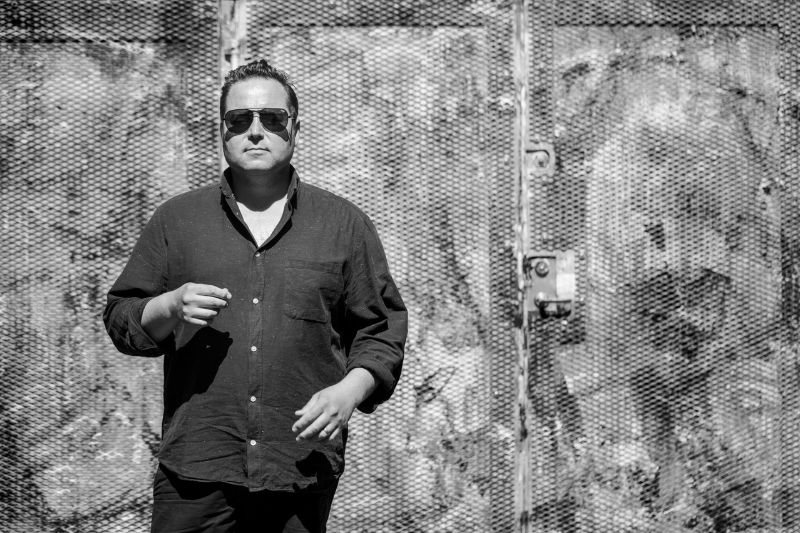
The author and critic Sebastian Johans (b. 1978) grew up in Åland and now shares his time between Uppsala and the island nation. He made his literary debut in 2020 with the critically acclaimed novel Broarna, which was also nominated for the Nordic Council Literature Prize. This was followed by his novel Döden och Kerstin in 2023. Alongside his fiction writing, Johans works as an art critic, including for the newspaper Dagens Nyheter, and he has published several books about a variety of artists. Svanhopp. Roman om död far was also nominated for Svenska Yle’s literature prize in 2025.