Completely edible food being thrown away – Nordic Council seeks to change retailers' responsibility

'Best before' labelling is used on a range of foods. Such a label means that although the product may change in texture or taste after that date, it remains edible. The idea is for the consumer to decide for themselves if the food is still edible.
Products that have passed their 'best before' date can still be sold, but retail employees are currently expected to judge for themselves whether a product is edible – an impossible task without opening the packaging. This results in completely edible food being thrown away unnecessarily.
According to Karin Gaardsted, member of the Nordic Council Committee for a Sustainable Nordic Region, there are plenty of opportunities to reduce food waste in the Nordic retail sector:
“In the Nordics, we have the knowledge and capacity to lead the way and show the world that there are solutions. This starts with changing the way we approach date labelling and retailer responsibility.”
Nordic Council seeks to change date labelling rules
The Nordic Council has therefore adopted a new proposal to reduce food waste in the retail sector. To help stop stores throwing away products unnecessarily, it is proposed that the consumer should instead have ultimate responsibility for deciding whether a product that has passed its 'best before' date can be eaten. At the same time, it is proposed that stores should reduce the price of these goods by a certain minimum percentage.
“By implementing these changes, we want to make it easier for people in the Nordics to pursue sustainable consumption habits while helping to achieve the UN's global goal of halving food waste by 2030,” emphasises Gaardsted.
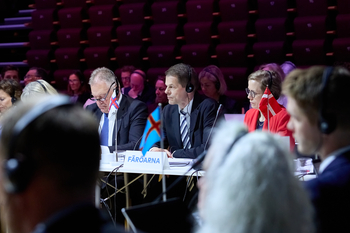
The proposal was first raised in the Nordic Council Committee for a Sustainable Nordic Region and has now been unanimously approved by the Nordic Council. The recommendation has now been submitted to the Nordic governments for further consideration and the Nordic Council is awaiting the governments' responses as the next step in the process.
Food waste is a priority of the Nordic Council Committee for a Sustainable Nordic Region in 2025. Read more about the initiative to reduce food waste here: