Young people call for greater exposure to Nordic languages
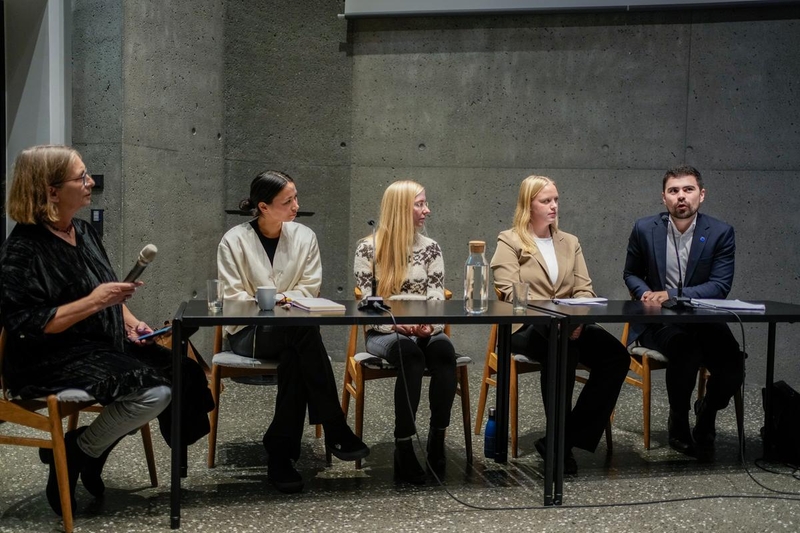
Panel diskussion med Unge i norden om sprog
It is hard to imagine a more fitting place to hold a debate on language, identity and the future than 'Veröld - hús Vigdísar, which pays homage to Iceland’s first woman president, Vigdís Finnbogadóttir, who has shown visionary leadership in strengthening small languages and promoting multiculturalism and linguistic diversity throughout her career.
If you ask representatives of the young generation, it’s not only important to preserve all our Nordic languages – from East Greenlandic, Sápmi, Nynorsk, Icelandic and Faroese to Swedish, Danish, Norwegian and Finnish – we also need more cultural and language exchange programmes between the Nordic countries and to do it “in a more fun way”.
The Icelandic Minister of Culture, Lilja Alfreðsdóttir, started the discussion with a short speech. Among the points she made was that it is important to work with the tech giants and that new products must use small languages like Icelandic if those languages are to survive.
Nina pointed out that it would be good if Greenlandic was taught in schools in other Scandinavian countries and feels that a lot of people don’t understand that Greenlandic isn’t just a language. Danish may be part of the school curriculum, but many young people outside Nuuk prefer to learn English rather than Danish because of all the new technology. She also fears that West Greenlandic will end up dominating, which could lead to the disappearance of dialects from the north, south and east, but she also said that language is very much a question of identity.
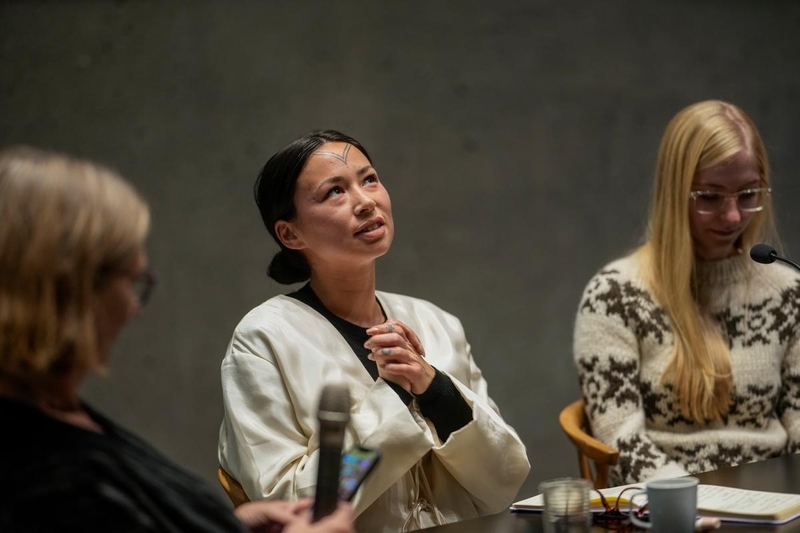
Annika stressed that language technology is much more than just ChatGTP. Technology such as spell checkers and speech-to-text programs are crucial to language development. She pointed out that it's important for the Nordic Region to develop its own technology because big tech has no commercial interest in supporting smaller languages. For example, speech-to-text only became available in Faroese this year.
Better support for language teaching
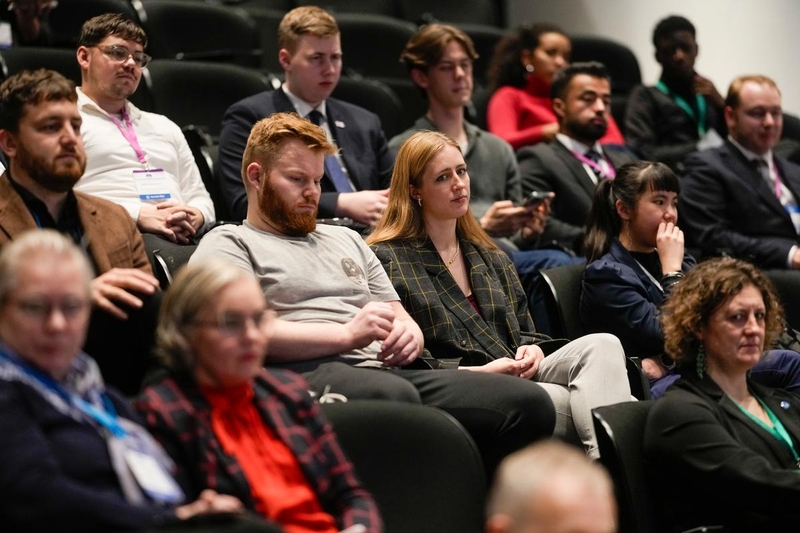
Everyone agreed that language learning needs to change and improve. Svava shared her concerns about whether Scandinavian languages will survive as a school subject in Iceland and mentioned that it takes focus and resources to ensure students receive adequate support for language learning. Programmes such as “Norden i skolen” (school-to-school chat) and Arctic Winter Games were mentioned as helping to create a common understanding of who we are in the Nordic Region and generate greater interest in each other. Perhaps we can draw inspiration from other countries’ approaches to minority languages, e.g. the Māori Language Act in New Zealand. It was a political decision to make Māori an official language, and all children in New Zealand now learn it from an early age.
Towards the end, the discussion touched on how to better integrate the teaching of languages, big and small, into Nordic schools. Alexander, who is studying to be a teacher, made a passionate plea to the politicians:
If you really want to help, you need to improve teaching conditions, cut teaching hours and relieve teachers of administrative duties. Give teachers more time to prepare, so language lessons are more engaging. But putting each other’s languages on school curriculums and increasing exposure to the Nordic Region in schools is a political decision.