2 February - 5 February 2026, Tromsø, Norway

Nordic Program at Arctic Frontiers 2026

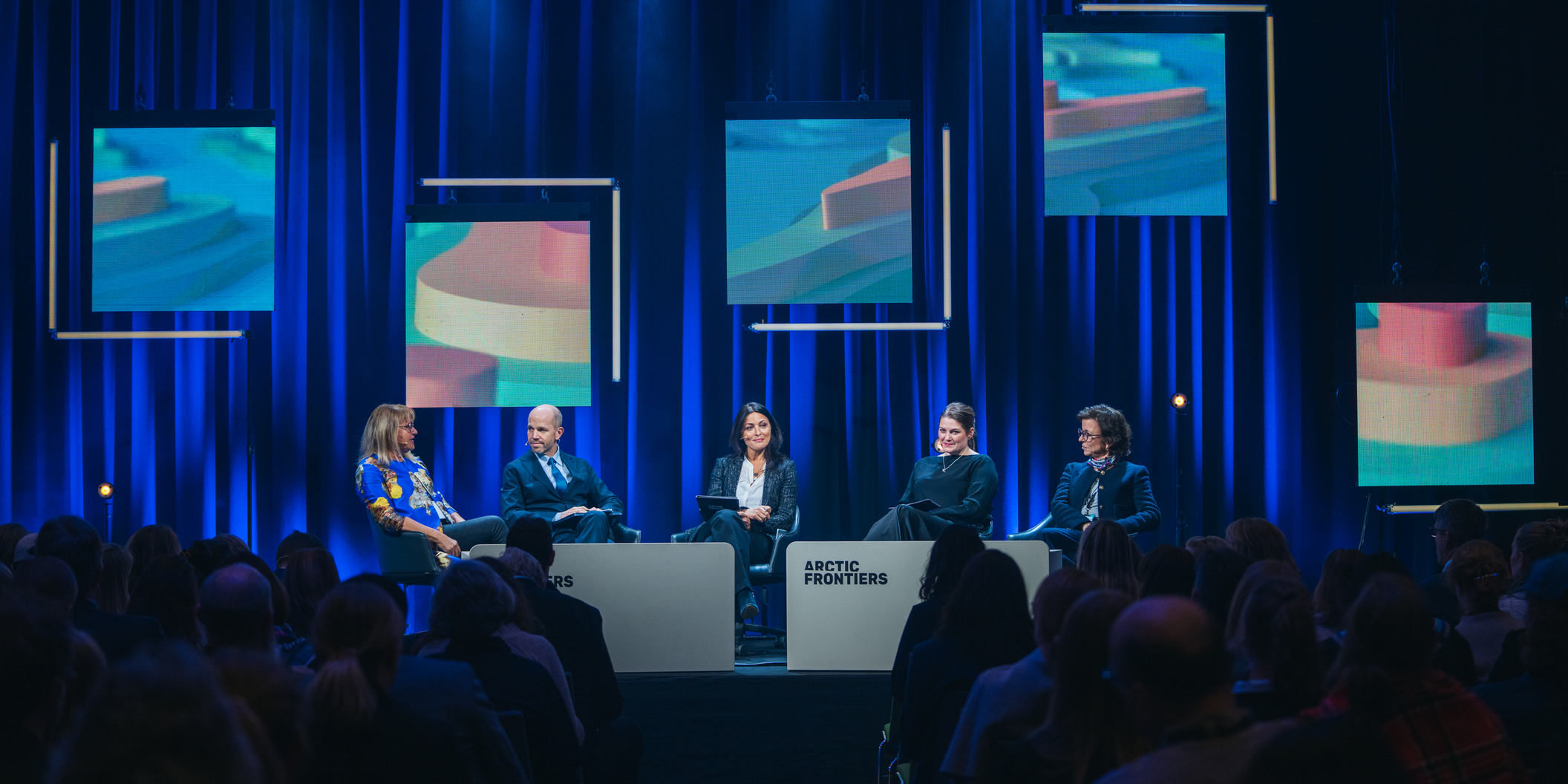
Meet Nordic Council of Ministers, NordForsk, Nordregio, Nordic Energy Research, and Nordic Innovation at Arctic Frontiers 2026. Explore our program, participate and watch live!

Fotograf
David Jensen / Arctic Frontiers

Arctic Frontiers brings together leading voices from science, policy, business, and local Arctic communities to transform knowledge into action on key Arctic challenges. See our full Nordic program.

Program overview

Monday 2 February

11.00 - 12.30 - Indigenous Engagement and Co-Creation in Arctic Research

13:30-15:00 - Nordic Priorities in International Arctic Research Collaboration

15:30-17:00 - On Thin Ice: Overtourism, Ecosystems and Livelihoods in the Arctic


Tuesday 3 February

Town Hall / pubinar - Energy security and the energy industry as a workplace for Nordic youth

Wednesday 4 February

9.00-10.30 - Looking Back, Moving Forward: 30 Years of Nordic Arctic Cooperation


Thursday 5 February

9:00-10:30 - From self-sufficiency to energy leaders: How Arctic solutions can create an energy secure region

11:00-12:30 - Blue economy in a Nordic perspective


Monday 02.02 - Indigenous Engagement and Co-Creation in Arctic Research

Monday 02.02.26

Indigenous Engagement and Co-Creation in Arctic Research

Date: Monday, 02/02/2026
Time: 11:00 - 12:30
Location: Importkompaniet, the Edge

The Arctic region is a testing ground for how societies, ecosystems, and species can adapt—or fail—in the face of rapid transformation. Climate change, overtourism, and shifting multispecies relations are reshaping landscapes, livelihoods, and cultures, often bringing them into conflict. 
International and cross-cultural cooperation in Arctic research depends on mutual respect, ethical engagement, and the recognition of Indigenous knowledge as a knowledge system in its own right. 
The Inuit Circumpolar Council (ICC) defines Indigenous knowledge as generational knowledge — passed from elders to younger generations through practice, stories, and lived experience. This form of knowledge is deeply rooted in doing and observing, not only in speaking or theorizing, emphasizing collaboration “with, not about” Indigenous communities, the sharing and co-production of data, and ensuring that Indigenous partners retain control over how knowledge is used. 

Indigenous knowledge is a systematic way of thinking applied to phenomena across biological, physical, cultural and spiritual systems. It includes insights based on evidence acquired through direct and long-term experiences and extensive and multigenerational observations, lessons and skills. It has developed over millennia and is still developing in a living process, including knowledge acquired today and in the future, and it is passed on from generation to generation.

The Sámi Council encourages researchers to adapt methods, timing, and communication to local contexts — for instance, aligning schedules with reindeer herding seasons, supporting interpretation in Sámi languages, and building long-term trust. Knowledge that is place-based, such as sacred sites or foraging areas, must be handled sensitively and always under the control of local knowledge holders.

Nine Nordic-Canadian research projects were recently launched under the call Sustainable development in the Arctic, emphasising the importance of Indigenous perspectives and co-creation when doing research in the Arctic. The network Making knowledge for sustainable transformations (MAST) explores different approaches to knowing-through-making. These efforts are examples of a  wider shift in Arctic research: from studying Indigenous communities to working with them as equal partners, ensuring that research strengthens Indigenous cultures, languages, and self-determination while deepening our understanding of the Arctic as a shared home.


Questions for discussion include:
•    How can Indigenous and scientific knowledge systems work together to reframe conflicts over species, land, and resources?
•    Can we create models of co-research and co-governance that are both sustainable and just?
•    How can we ensure that the collaborations lead to knowledge sharing and mutual benefits instead of knowledge mining and extraction? 
•    What are the roles of the different stakeholders in such a knowledge exchange?
•    Whose knowledge counts when deciding the future of the Arctic?

This event is hosted by NordForsk and UiT- The Arctic University of Norway


Speakers

Torjer Andreas Olsen, Professor, UiT The Arctic University of Norway

Sara Olsvig, Chair, Inuit Circumpolar Council

Gunn-Britt Retter, Head of Arctic and Environmental Unit, Saami Council

Rune Vistad, Director, Department for International Cooperation, The Research Council of Norway

Hanna-Maret Outakoski, Professor, Sámi University of Applied Sciences 

Jørgen Berge, Pro Rector for Research, UiT The Arctic University of Norway

LIVE: Indigenous Engagement and Co-Creation in Arctic Research

Watch LIVE: Indigenous Engagement and Co-Creation in Arctic Research

Monday 02.02 - Nordic Priorities in International Arctic Research Collaboration

Monday 02.02.26

Nordic Priorities in International Arctic Research Collaboration

Date: Monday, 02/02/2026
Time: 13:30 - 15:00
Location: Margarinfabrikken 2, the Edge

Arctic research is international by nature. The very fast Arctic changes, the geopolitical situation and the upcoming International Polar Year (IPY-5) requires collaboration across borders. The Nordic countries have a long tradition of collaborating in many areas. NordForsk provides funding and facilitates Nordic cooperation on research and research infrastructure, also included non-Nordic countries.   

All the Nordic countries are Arctic countries and have strategies and priorities for Arctic research. In the coming years, these priorities will be a basis for the countries’ involvement in IPY-5.  International collaboration will become even more important towards the next International Polar Year (IPY-5) 2032-2033 and it is vital to make the best use of national resources. That can include funding, infrastructure, observations and how to use and store long-term data.   

The Arctic is not uniform, but the Arctic Ocean and land masses should be managed holistically across many different management areas and beyond national borders. The resilience of the different geographical areas of the Arctic is a critical concern, encompassing the ability of its ecosystems and communities to adapt to and recover from rapid environmental, economic and social changes. Can its ecosystems withstand the accelerating pace of change? How well are Arctic societies and municipalities prepared for both current challenges and uncertain futures? 

These are not only environmental questions, but lie at the intersection of science, policy, and diplomacy. Protecting the Arctic is not only about preserving biodiversity but also about defending a way of life that holds lessons for global sustainability. Therefore, Arctic resilience is both a regional necessity and a global concern. 

This session will explore how Nordic and international collaboration can add value to Arctic research. Presentations on national priorities in Arctic research from Nordic research councils and a panel debate on opportunities for future Nordic-led international research.

This event is hosted by the Research Council of Norway.


Speakers

Rune Vistad, Director, Department for International Cooperation, The Research Council of Norway

Sven Stafström, Professor, Linköping University

Christina Abildgaard, Department Director, Research Council of Norway

Julius Mihkkal Lindi, Project Advisor, Arctic and Environmental Unit of the Saami Council

Laura Forsstrõm, Senior Science Adviser, Research Council of Finland

Malou Platou Johansen, Lecturer, Ilisimatusarfik - University of Greenland

David Hik, Chief Scientist and Executive Director (Programs), Polar Knolwedge Canada 


Monday 02.02 - On Thin Ice: Overtourism, Ecosystems and Livelihoods in the Arctic

Monday 02.02.26

On Thin Ice: Overtourism, Ecosystems and Livelihoods in the Arctic

Date: Monday, 02/02/2026
Time: 15:30 - 17:00
Location: Importkompaniet, the Edge

Climate change and mass tourism threaten fragile ecosystems and Indigenous ways of life in the Arctic. Can legal frameworks help protect both nature and culture? We ask this question at our side event at Arctic Frontiers: Turn of the Tide 2026.

The Arctic is changing faster than almost anywhere else on the planet. Melting ice, shifting habitats, and increasing human pressure from mass tourism are reshaping landscapes that for centuries have sustained both wildlife and Indigenous communities. National Parks in the Arctic—long seen as sanctuaries of nature—are now at the frontlines of these pressures.

This seminar brings together researchers, practitioners, and community voices to explore what’s at stake and what solutions might be within reach.

Key questions:

How can law adapt quickly enough to address the accelerating impacts of climate change in the Arctic?

What role should legal frameworks play in balancing tourism growth with the protection of fragile ecosystems?

How can Indigenous rights and livelihoods be safeguarded when economic, cultural, and ecological pressures collide?

This event is hosted in collaboration with Fridtjof Nansen Institute and Nordregio.

The event will be streamed. The link to the livestream will be published here when it is available.


Speakers

Kristin Rosendal, Research Professor, Fridtjof Nansen Institute

Ágúst Bogason, Senior Research Adviser, Nordregio

Guttorm Aanes, Head of Communication, NordForsk

Helga Bårdsdatter Kristiansen, Sustainability Advisor, Tromsø Municipality

Ellen-Sara Sparrok, Vice President, Saami Council

Camilla Aviaja Olsen, International Chair / Head of Section, Arctic Council's Sustainable Development Working Group / Ministry of Foreign Affairs and Research, Greenland

LIVE: On Thin Ice: Overtourism, Ecosystems and Livelihoods in the Arctic

Watch LIVE: On Thin Ice: Overtourism, Ecosystems and Livelihoods in the Arctic

Tuesday 03.02 - Town Hall / pubinar - energy security and the energy industry as a workplace for Nordic youth

Tuesday 03.02.26

Town Hall: Energy security and the energy industry as a workplace for Nordic youth

Date: Tuesday, 03/02/2026
Time: 18:00 - 19:30
Location: Tvibit, Parkgata 27, 9008 Tromsø 


For the Arctic Frontiers Open event (The energy future of the Arctic – your choice) we welcome everyone interested in joining the dialogue on how the future energy system will be shaped by the ideas and demands of the young generation.

The event is held in Norwegian.

During the event you will hear from key individuals who are working with the energy system in the Arctic, what they do, who they are and how they got there. Furthermore, the event will have a debate about what we demand from the energy transition, what sort of developments we want to see, what sort of jobs we want and what considerations must be made. This will include perspectives on the jobs of tomorrow, the role of Indigenous Peoples, and what energy security really means. 

This event is co-organised by Nordic Energy Research, Troms Country, Tromsø municipality, UiT – The Arctic University of Norway, and True North.  


Speakers

Thomas Henriksen, Operational Leader Hammerfest LNG, Emerging Leader 2026

David Smirat, Municipal Executive Committee, Luleå Municipality, the Social Democrats

Kristoffer Karlsen, Public Safety and Emergency Preparedness in Tromsø Municipality

Inger Johnsen, Director of Communication and Society, Troms Kraft

Co-moderator: Ole Aune Ødegård, Senior Adviser, Nordic Energy Research

Co-moderator: Mari Bondevik, Communications, True North

Wednesday 04.02 - Looking Back, Moving Forward: 30 Years of Nordic Arctic Cooperation

Wednesday 04.02.26

Looking Back, Moving Forward: 30 Years of Nordic Arctic Cooperation

Date: Monday, 04/02/2026
Time: 09:00 - 10:30
Location: Margarinfabrikken, the Edge

The year 2026 marks a milestone in Arctic and Nordic collaboration: 30 years since the Nordic Council of Ministers launched its first Arctic Cooperation Programme, designed to strengthen cross-border people-to-people cooperation in the Nordic Arctic. 

Looking back over three decades, the Arctic has emerged as a powerful example of international collaboration, where people, policymakers, researchers, Indigenous Peoples, and youth have worked together to foster mutual understanding and shared solutions across borders.

Today, this cooperation faces new challenges. Geopolitical tensions, accelerating climate change and shifting economic realities are testing the resilience of Arc-tic cooperation frameworks. Yet, these same pressures also open new opportunities for innovation, dialogue, and inclusive leadership.

Against this backdrop, the Nordic Council of Ministers invites participants to join a high-level discussion reflecting on three decades of Nordic Arctic cooperation, while looking ahead to the next 30 years of shared responsibility and opportunity in the region.

This side event is organized by the Nordic Council of Ministers


Speakers

Hanna Katrín Friðriksson, Icelandic Minister of Industries

Eivind Vad Petersson, Norwegian State Secretary

Sara Olsvig, Chair, Inuit Circumpolar Council

Svein Vigeland Rottem, Senior Researcher, Fridtjof Nansen Institute

Unni Kløvstad, Director, Nordic Council of Ministers

Ole Martin Melbøe Nygård, Vice Chair, Barents Regional Youth Council

Inga M. W. Nyhamar, Senior Adviser, Ministry of Foreign Affairs Norway

Lars Kullerud, President, University of the Arctic (UArctic)


LIVE: Looking Back, Moving Forward: 30 Years of Nordic Arctic Cooperation

Watch LIVE: Looking Back, Moving Forward: 30 Years of Nordic Arctic Cooperation

Thursday 05.02 - From self-sufficiency to energy leaders: How Arctic solutions can create an energy secure region

Thursday 05.02.26

From self-sufficiency to energy leaders: How Arctic solutions can create an energy secure region

Date: Thursday, 05/02/2026
Time: 09:00 - 10:30
Location: Arbeidskontoret 1, the Edge

Resilience and preparedness have become central pillars of policy and practice across the Nordic Region. Yet, in the Arctic, these principles are not just priorities—they are a way of life, evolved over decades of navigating extreme conditions and rapid change. Arctic communities have long mastered the art of building societies that withstand adversity, adapt to uncertainty, and thrive amidst disruption.

So, what can we learn from our northernmost regions? Can these approaches be adapted and exported to strengthen resilience in other regions facing new and complex challenges?

Join us for a dialogue that bridges North and Nordic, drawing on case studies and cross-sector collaboration.

We are aiming to bring speakers from the Nordic energy cooperation, Troms County and Troms Kraft, as well as from Tromsø Municipality, and mayors from Arctic cities in the Nordic Region.


Co-organizers: Nordic Energy Research, Troms County, Tromsø Municipality


Speakers

Clara Good, UiT The Arctic University of Norway

Carina Sammeli, Mayor, Luleå Municipality

Jan-Gunnar Winther, Director, Centre for the Ocean and the Arctic at UiT

Greg Poelzer, Professor, University of Saskatchewan

Patti Bruns, Secretary General, Arctic Mayors' Forum

Ole Gunnar Håland, Emergency Preparedness Manager, Tromsø Municipality

Kimmo Alatulkkila, Director, Oulun Energia

Magnus Fors Haigen, Co-founder and CMO, Avju Solutions

Klaus Skytte, CEO, Nordic Energy Research

Thursday 05.02 - Blue economy in a Nordic perspective

Thursday 05.02.26

Blue economy in a Nordic perspective

Date: Thursday, 05/02/2026
Time: 11:00 - 12:30
Location: Arbeidskontoret 2, the Edge

The Arctic is defined by its vast marine and coastal areas, and marine industries such as offshore energy, fisheries, aquaculture, and shipping already are crucial parts of economies across the region. Put together, these sectors make up an “ocean economy” of immense value globally. And the ocean economy is set to become larger still in coming years, as the need for more energy production, raw materials, and lower-carbon proteins will draw more players offshore. 

The Arctic will be a key arena for this development, as the melting sea ice creates more and more space for activity – and conflict. To name just a few examples, in the years to come we may see large-scale fisheries moving further north; changing Arctic ecosystems with an influx of new species; increased demand for icebreakers – of which Finland is a leading supplier – to escort maritime transport; more cruise activity around Greenland and Svalbard; and, controversially, seabed mining on the North Atlantic Ridge.

How should we prepare for this future? This event will give you a variety of answers to that question, including from Unni Kløvstad, who will give a primer on how the Nordic Cooperation approaches questions relating to the ocean and the Arctic, and from two panels of experts — one focused on business and innovation perspectives, and the other centred on the needs of local communities and the environment.

You will also get in-depth insights from Nordic Oceans 2050, a scenario development project led by DNV and funded in part by Nordic Innovation. The report from that project is now available on Nordic Innovation's website.

This event is hosted by Nordic Innovation


Speakers

Øivind Bergh, Senior Researcher, Institute of Marine Research

Gustav Kågesten, HUB Ocean

Marianne Sivertsen Næss, Minister of Fisheries and Ocean Policy of Norway

Emil Gejrot, Nordic Innovation

Sigurd S. Pettersen, DNV

Unni Kløvstad, Director, Nordic Council of Ministers

Sigri Stokke Nilsen, Centre for the Ocean and the Arctic

Benedek Regoczi, Iceland Ocean Cluster

Terje Jørgensen, Director, Port of Kirkenes

Karen Motzfeldt, Special Advisor, Oceans North Kalaallit Nunaat

LIVE: Blue Economy in a Nordic perspective

Watch LIVE: Blue Economy in a Nordic perspective

Nordic Council of Ministers to boost Arctic communities

In the tenth Nordic Arctic programme, 30 million Danish Kroner over a period of 3 years, are set to foster social, economic,  and environmental resilience.

"The Nordic Council of Ministers aims to bolster resilience and contribute to strong local communities in the Arctic"

Secretary General Karen Ellemann.

Nordic Arctic Programme 2025-2027

Nordic Arctic Programme 2025-2027

The Nordic Arctic Programme 2025-2027 aims to support socially, economically, and environmentally resilient Arctic communities. By promoting robust civil societies, sustainable economic growth, and green transitions, the programme aims to supports local initiatives and partnerships that inspire resilience across the Nordic-Arctic region. Through this programme the Nordic Council of Ministers will back innovative Arctic projects aligned with the Nordic Council of Ministers 2030 vision.

Contact

Anne-Katrine Brandt Olsen
Senior Adviser/International Cooperation
+45 60 39 42 75
annols@norden.org 

Ida Croff
Project Officer/Communication
+45 60 39 71 98
idacro@norden.org

Relevant publications

23.01.25

A Resilient Arctic Nordic Arctic Programme 2025–2027

Publications number:
2025:703
02.11.23

Peace and Security in the Arctic

Publications number:
2023:734
02.11.21

A Sustainable Arctic – The Nordic Council of Ministers’ Arctic Co-operation Programme 2022–2024

Publications number:
2021:737
22.09.23

Young Voices from the Arctic: Insights on Climate Change and Permafrost Degradation

Publications number:
2023:6
17.06.24

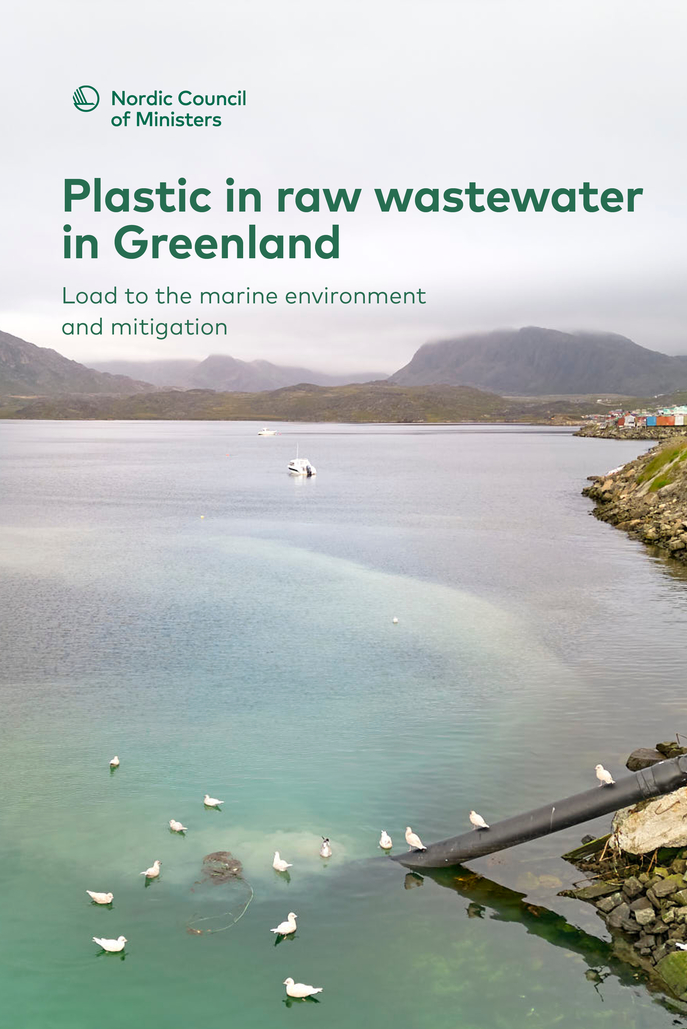
Plastic in raw wastewater in Greenland

Publications number:
2024:516
19.02.24

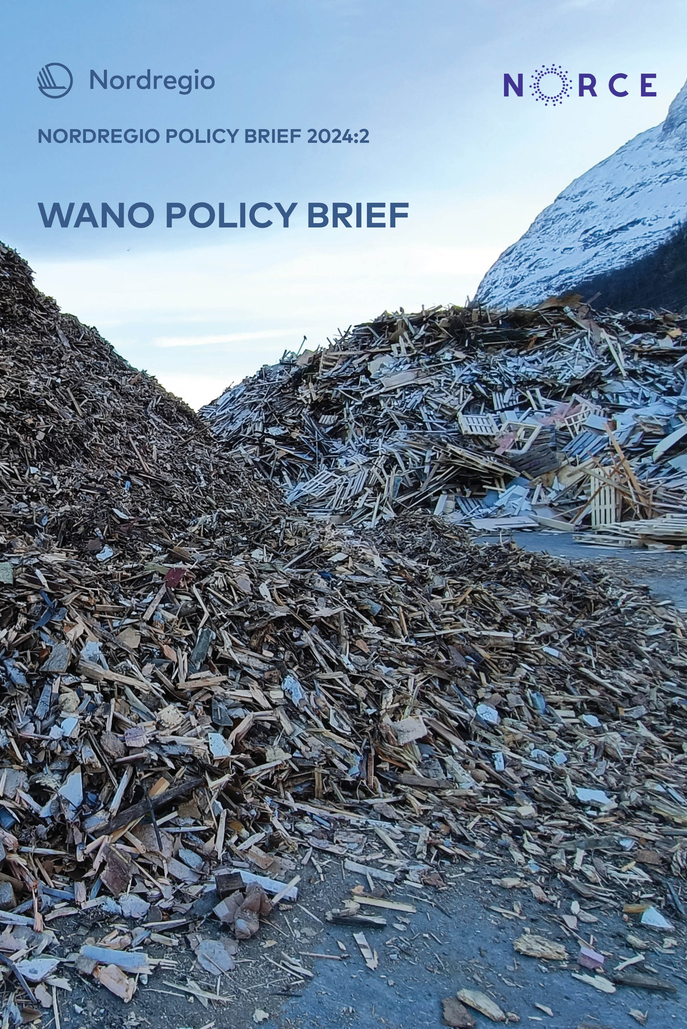
WANO policy brief

Publications number:
2024:2
17.03.26

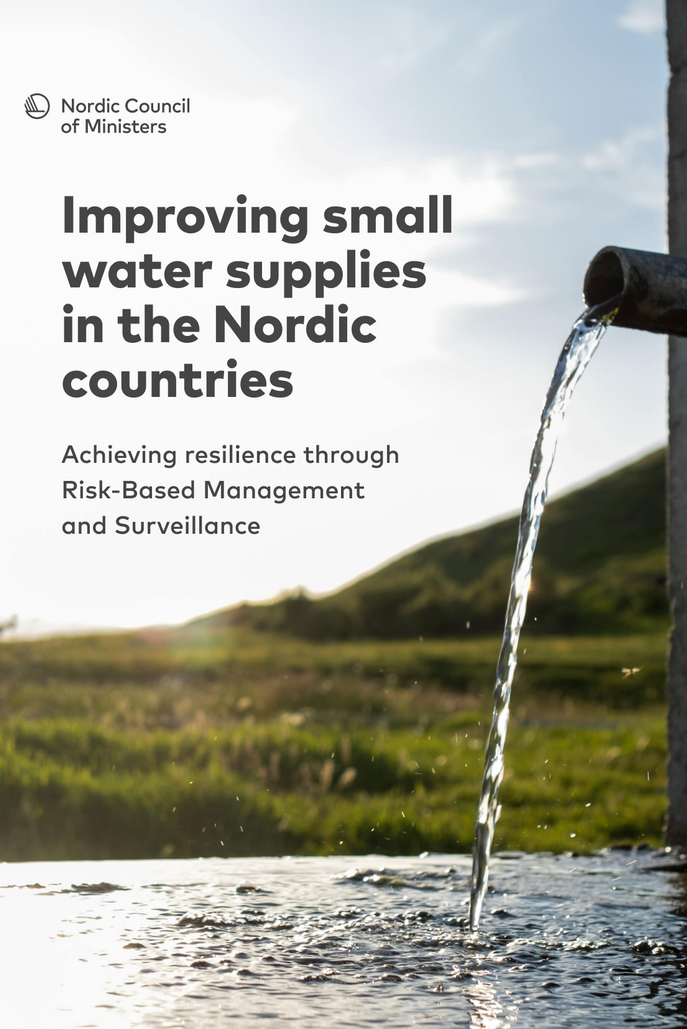
Improving small water supplies in the Nordic countries

Publications number: 2026:505
17.02.26

Indigenous tourism in the European Arctic

Publications number: 2026:501
04.02.26

A Nordic Perspective on AMOC Tipping

Publications number:
2026:504
20.01.26

Other Effective Area-based Conservation Measures (OECM) and Indigenous-led Conservation in the Nordic region and the wider Arctic

Publications number: 2025:556
07.12.25

EXPO 2025, Osaka, Japan

Publications number: 2025:036
27.10.25

Nordic Cryosphere Digital Twin

Publications number: 2025:565
22.10.25

Together for a Green Future in the Nordic Region and the World

Publications number: 2025:034
04.08.25

Vejledning til styrkelse af borgerinddragelse i forvaltning af naturen i Arktis

Publications number: 2025:543
04.08.25

Styrket lokalt baseret monitering og forvaltning af levende ressourcer i Arktis

Publications number: 2025:525
03.06.25

Nordic Biodiversity Framework

Publications number: 2025:553